
The consequences of tooth loss are not limited to aesthetics but can also lead to serious impacts on overall health. If not treated promptly, this condition can result in jawbone resorption and misalignment of the entire chewing system. Do not underestimate the effects of tooth loss such as bone loss, premature aging, or bite misalignment. Discover the 5 major consequences and the most effective solutions available today.
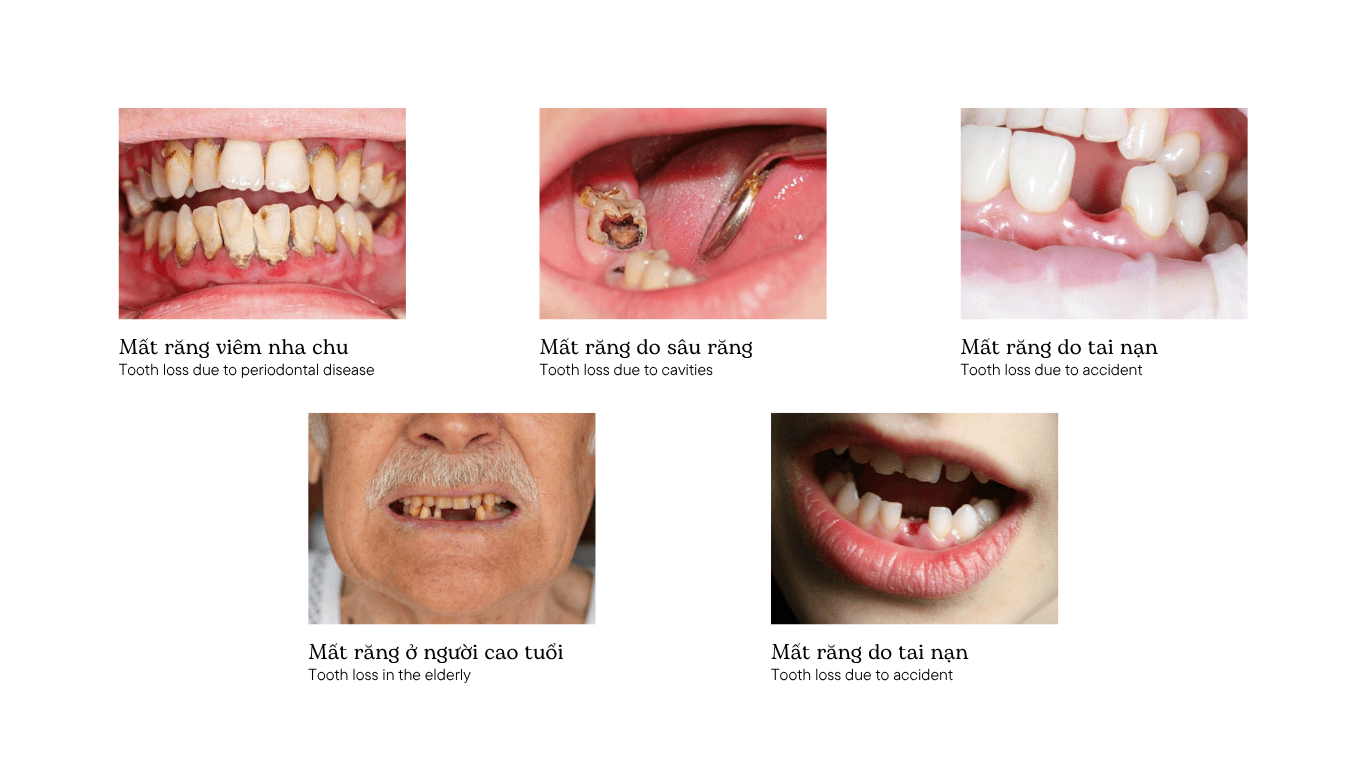
There are many causes that can lead to permanent tooth loss
There are many possible causes of permanent tooth loss, including:
Even losing just one tooth can significantly affect chewing function.
Regardless of the cause, tooth loss in adults cannot regenerate naturally. Common consequences include:
Losing one tooth actually reduces chewing efficiency significantly, as the opposing tooth also loses function. This leads to poor food grinding before swallowing, increasing the risk of digestive issues such as stomach pain. Loss of molars, in particular, greatly impacts chewing ability and reduces the enjoyment of eating.
Tooth loss not only reduces chewing force but also causes adjacent teeth to shift, disrupting the bite. Teeth function as a unified system to distribute chewing forces evenly. When one tooth is lost, the opposing tooth may over-erupt or sink into the gap, leading to bite imbalance and discomfort during chewing.
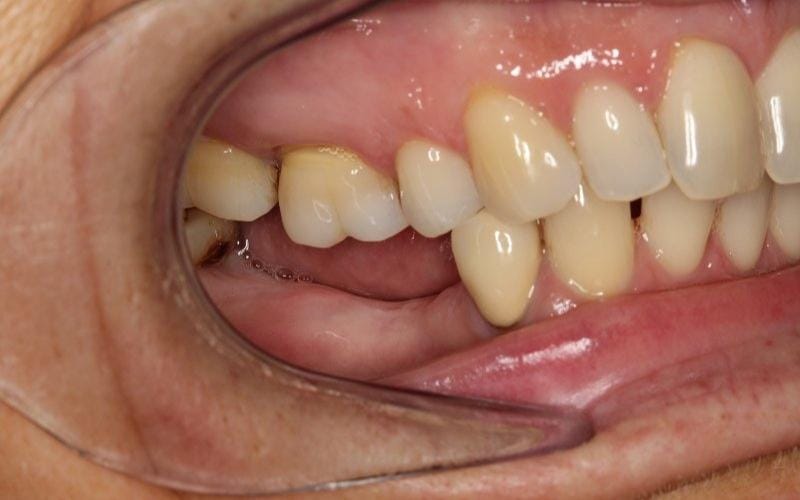
Even the loss of a single tooth can significantly affect chewing function.
After tooth loss, the surrounding jawbone begins to deteriorate due to lack of stimulation. This leads to facial changes such as sunken cheeks, sagging skin, and the early appearance of wrinkles, making the face look older than actual age.
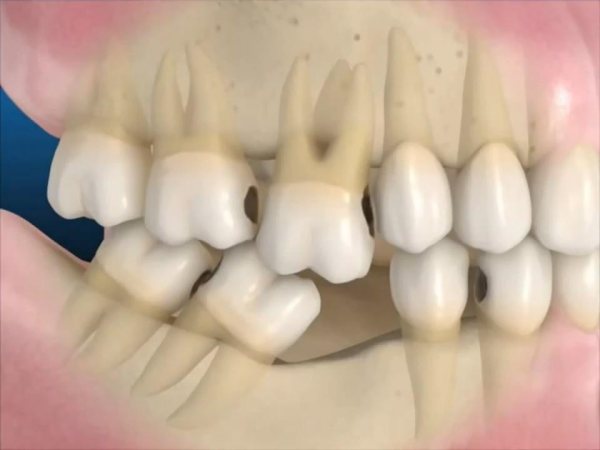
Losing a molar can cause neighboring teeth to shift, leading to bite misalignment
Missing teeth can disrupt jaw balance, causing uneven pressure on remaining teeth. Over time, this affects the temporomandibular joint (TMJ), leading to headaches, neck pain, and shoulder discomfort.
Teeth play an important role in pronunciation. Tooth loss creates gaps that lead to unclear speech, especially when front teeth are missing, affecting the coordination between lips, tongue, and teeth.
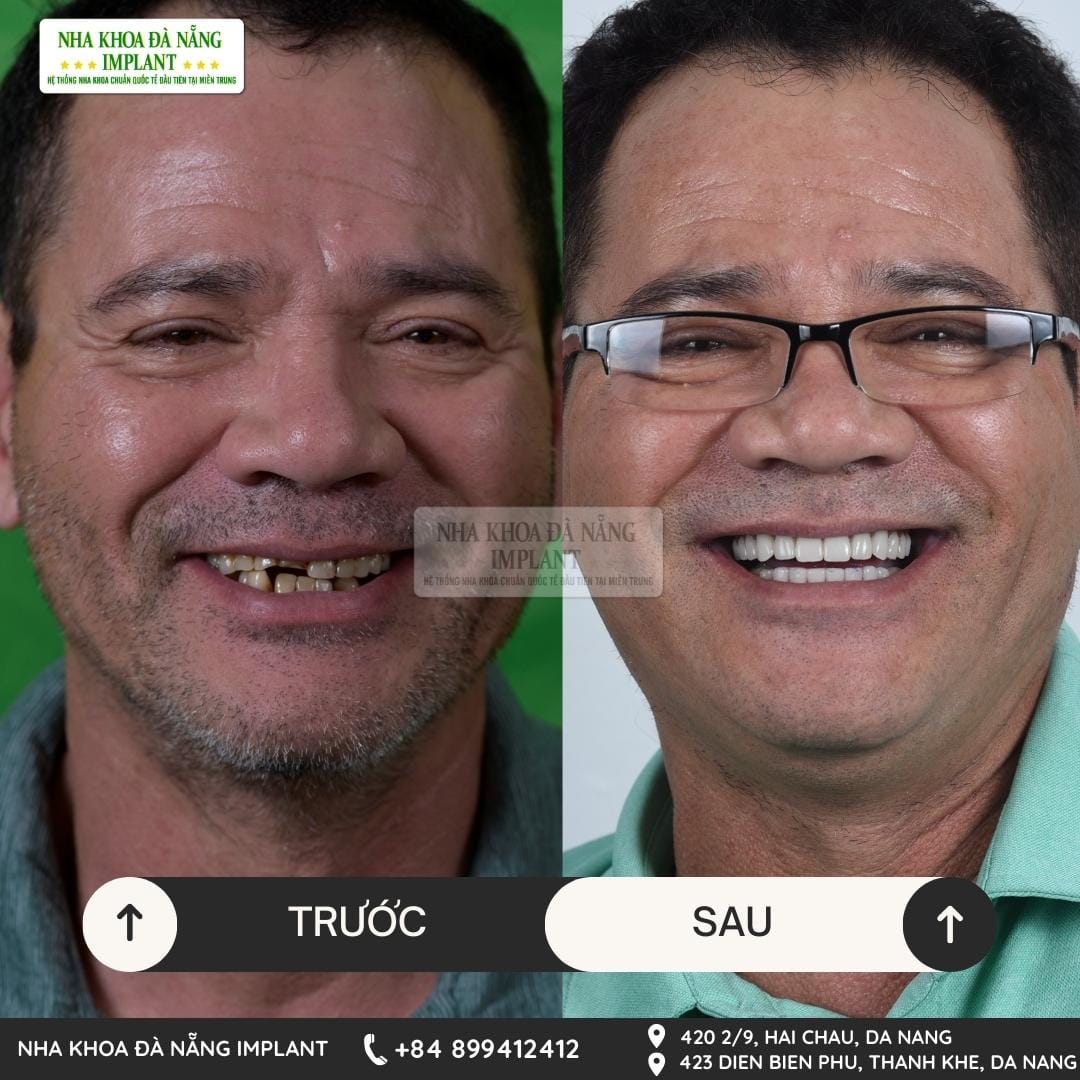
Losing molars leads to jawbone resorption, facial changes, and premature aging
Tooth loss affects facial aesthetics, especially when visible teeth are missing. Over time, shifting teeth can worsen the appearance of the entire dental arch. It may also cause speech issues, discomfort, and reduced confidence in communication.
Jawbone loss also leads to sunken cheeks, sagging skin, and wrinkles around the mouth—key signs of premature aging.
Reduced chewing efficiency affects diet and nutrition. People tend to avoid hard foods, leading to lower intake of fiber and vitamins, which may result in conditions like vitamin deficiencies and constipation.
Tooth loss, especially in visible areas, can lead to self-consciousness, anxiety, and reduced confidence.
Many people wonder what to do after losing a tooth, especially multiple teeth. There are several treatment options to minimize complications:
Suitable for elderly patients or those missing multiple teeth. They are cost-effective and consist of a base (plastic or metal framework) and artificial teeth, which can be easily removed and reinserted.
A fixed solution that requires adjacent teeth to be strong enough to support the bridge.
Pros: Better chewing function than dentures, more durable, natural appearance
Cons: Difficult to clean underneath, does not prevent bone loss, may chip when chewing hard foods
Dental implants are currently the most optimal solution for replacing one, multiple, or even full-arch missing teeth. They restore chewing function almost like natural teeth.
This method involves placing a titanium implant directly into the jawbone to replace the missing tooth root, followed by a dental crown on top. The result is a fully functional, natural-looking tooth with excellent aesthetics and durability.
Tooth loss can lead to serious consequences affecting both health and appearance. Therefore, if you experience tooth loss, you should visit a dental clinic as soon as possible for timely treatment, avoiding complications and more complex procedures later.
Ngày: 28/02/2026

Ngày: 02/03/2026
Ngày: 22/11/2025