
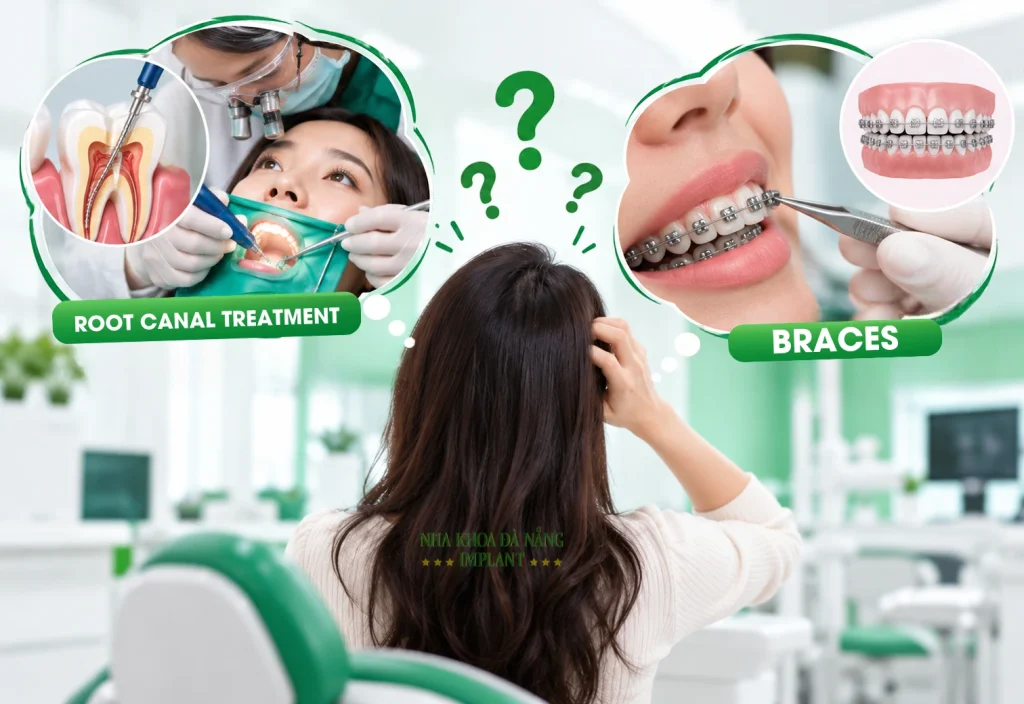
You are undergoing orthodontic treatment when your dentist unexpectedly tells you that one of your teeth needs root canal treatment. Does this mean you have to remove your braces, pause your orthodontic treatment, or completely change your original treatment plan?
Root Canal Treatment During Braces
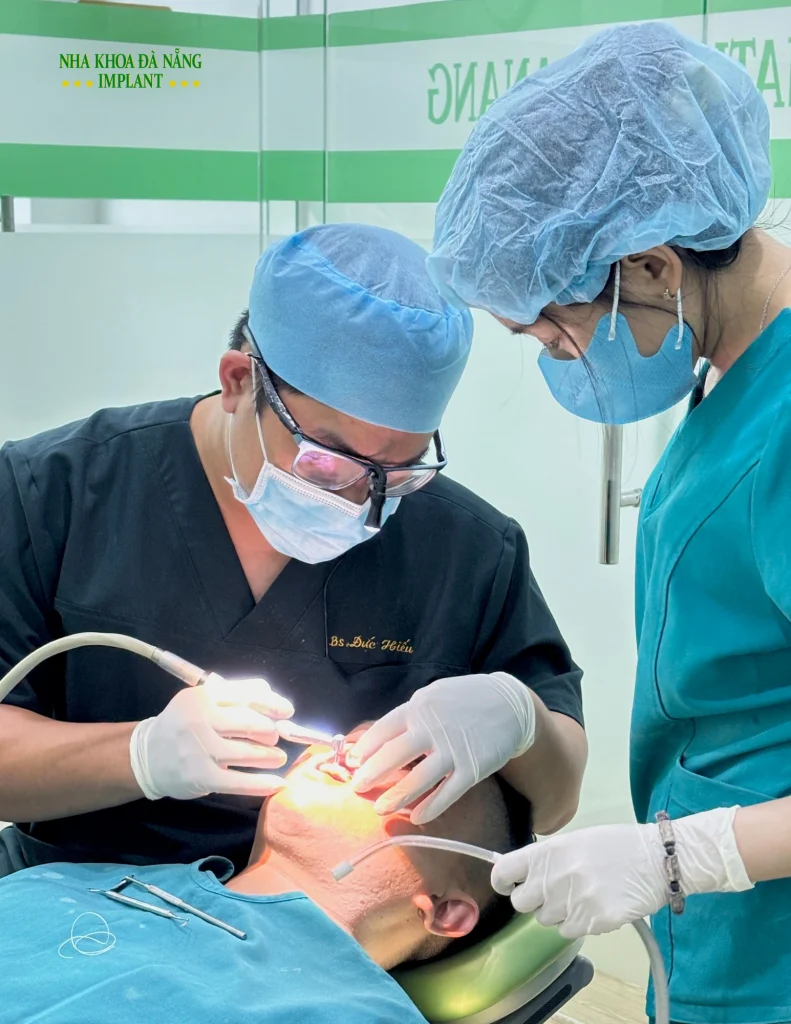
Root canal treatment can still be performed while wearing braces. However, the dentist needs to assess the affected tooth, treat the pulp condition, and adjust orthodontic forces appropriately. The goal is to preserve the tooth whenever possible while allowing orthodontic treatment to continue safely.
The need for root canal treatment may be related to tooth decay, cracks, or previous dental trauma. Sometimes, an old injury is only discovered during orthodontic treatment. Therefore, needing root canal treatment during this period does not automatically mean that braces have damaged the dental pulp.
Why Might You Need Root Canal Treatment While Wearing Braces?
Brackets and archwires can also make oral hygiene more challenging. If plaque accumulates over time, tooth decay may develop without the patient noticing it early.
Not every toothache requires root canal treatment. The dentist must determine the cause, extent of damage, and possibility of preserving the pulp before deciding on the appropriate treatment.
Pressure and soreness after orthodontic adjustments can be difficult to distinguish from pain caused by dental disease. The following table can help you recognize when to contact your dentist, but it does not replace a professional diagnosis.
| Symptoms | Recommended Action |
|---|---|
| Pressure or soreness after an orthodontic adjustment that gradually subsides | Monitor as instructed and inform your dentist if the pain worsens or lasts longer than expected. |
| Noticeable pain in one tooth, spontaneous pain, or pain that disrupts sleep | Schedule an examination promptly. Do not automatically assume the pain is caused by orthodontic adjustments. |
| Sensitivity to hot or cold that persists after the stimulus is removed | The condition of the dental pulp needs to be evaluated. |
| Gum swelling, a pus-filled bump, or significant pain when biting | Seek an early dental examination to check for infection and problems involving the tissues surrounding the tooth root. |
These symptoms may have several possible causes. A tooth with pulp necrosis does not necessarily cause severe pain.
If facial swelling occurs together with fever, seek urgent dental care. If you experience difficulty swallowing or breathing, seek emergency medical attention immediately. Do not wait until your next scheduled orthodontic appointment.
The dentist examines the tooth and surrounding tissues, evaluates responses to pulp sensibility tests, and takes dental X-rays when indicated. Information about previous dental trauma, fillings, toothaches, and the timing of orthodontic adjustments should also be discussed.
During orthodontic treatment, responses to pulp sensibility tests may change. Therefore, a tooth should not be diagnosed as having a necrotic pulp based solely on a lack of response to a single test. The dentist needs to consider multiple clinical findings.
The endodontist evaluates the dental condition and the tooth’s prognosis. The orthodontist assesses how the affected tooth is being moved, whether it plays an anchorage role, and what adjustments to the orthodontic appliances may be necessary.
Depending on the condition, the treatment plan may include:
Temporarily suspending active orthodontic forces on the tooth requiring root canal treatment.
Adjusting the archwire or orthodontic appliances to facilitate treatment.
Continuing orthodontic treatment in other areas if the force system allows.
Temporarily pausing the movement of one tooth does not necessarily mean stopping orthodontic treatment for the entire arch. However, this decision must be based on the specific orthodontic force system and cannot be applied uniformly to every case.
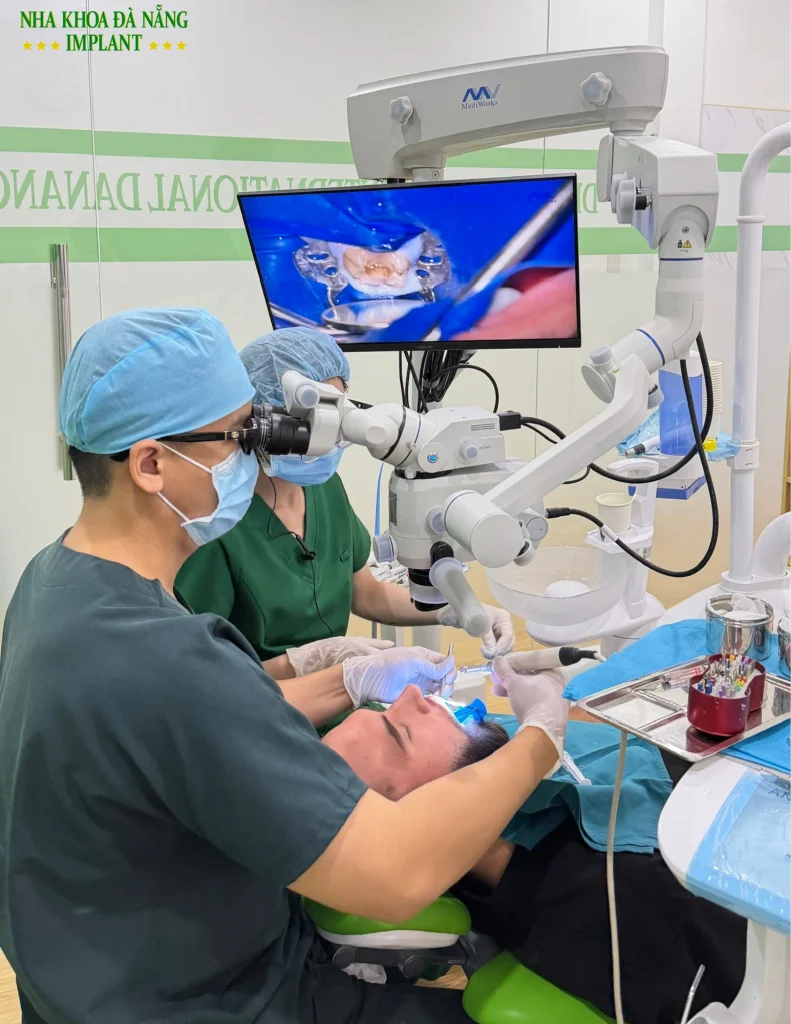
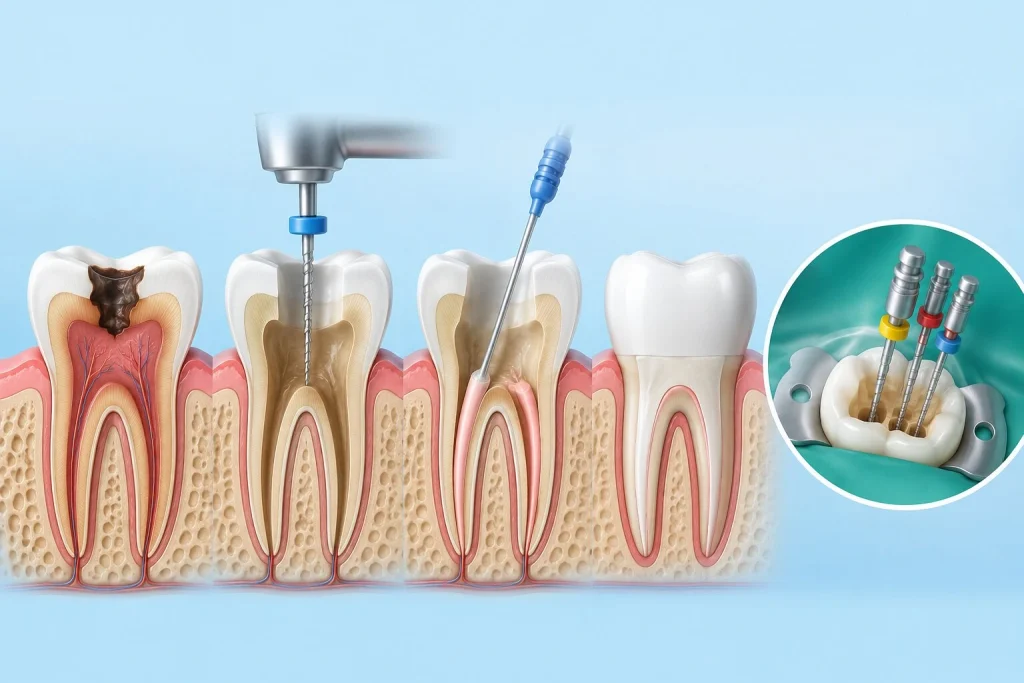
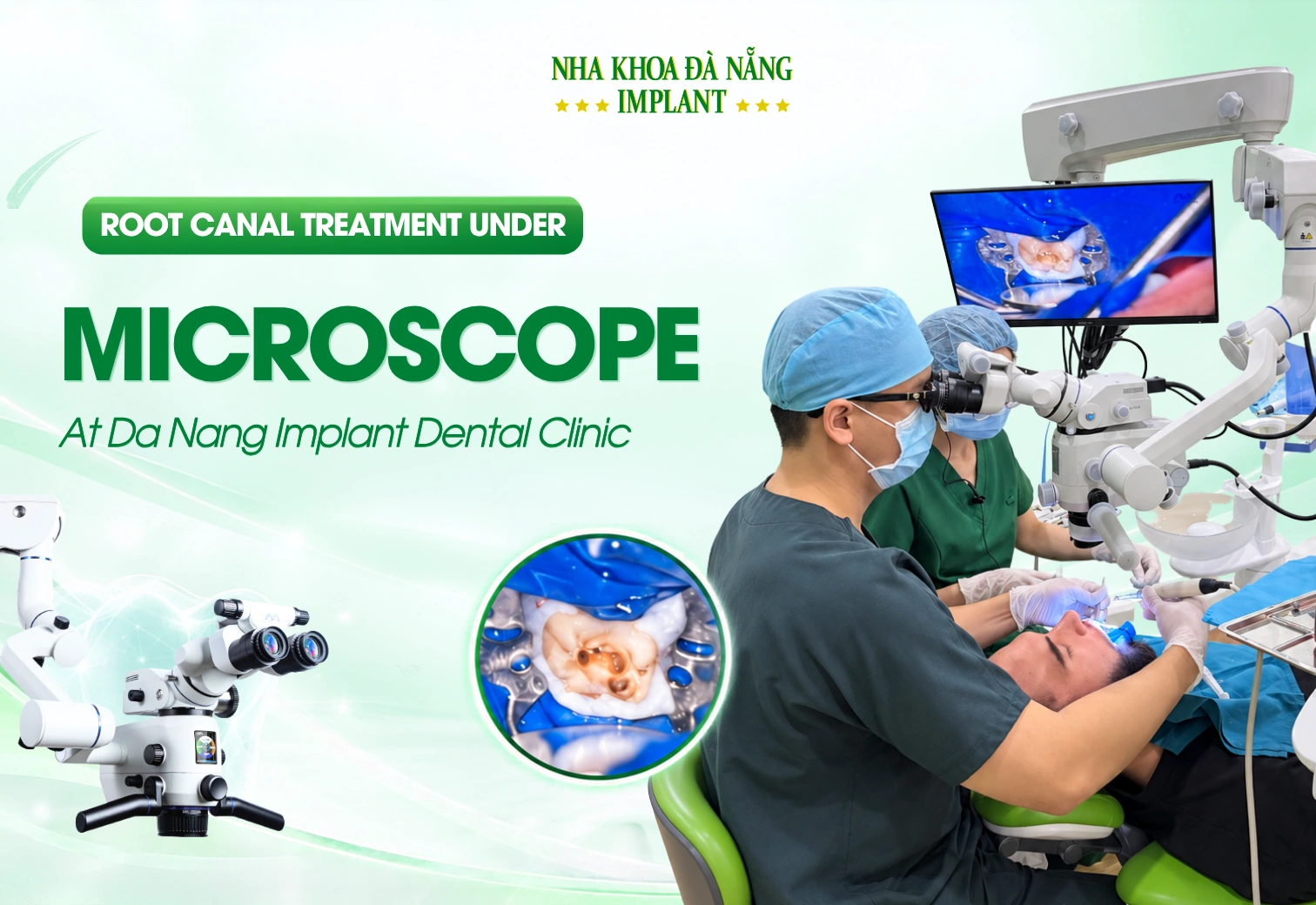
When indicated, the dentist treats the root canal system through cleaning, disinfection, and root canal filling according to the clinical condition. The tooth must be appropriately isolated and properly restored with a reliable seal to minimize the risk of reinfection. [1]
Whether the archwire or bracket needs to be removed from the affected tooth depends on accessibility, isolation requirements, and the type of orthodontic appliance being used.
Patients should never attempt to remove brackets or independently change their clear aligner wear schedule.
The dentist assesses symptoms, the quality of root canal treatment, restoration of the tooth structure, and the condition of the periapical tissues.
If the tooth has a history of trauma, periapical lesions, or root resorption, more careful monitoring may be required.
There is no universal waiting period that applies to every patient. The appropriate time to resume orthodontic forces depends on the underlying condition, extent of damage, and healing progress.
After orthodontic treatment resumes, the dentist monitors both tooth movement and the condition of the root canal-treated tooth.
Dental imaging may be indicated based on clinical needs to evaluate the periapical region and tooth roots.
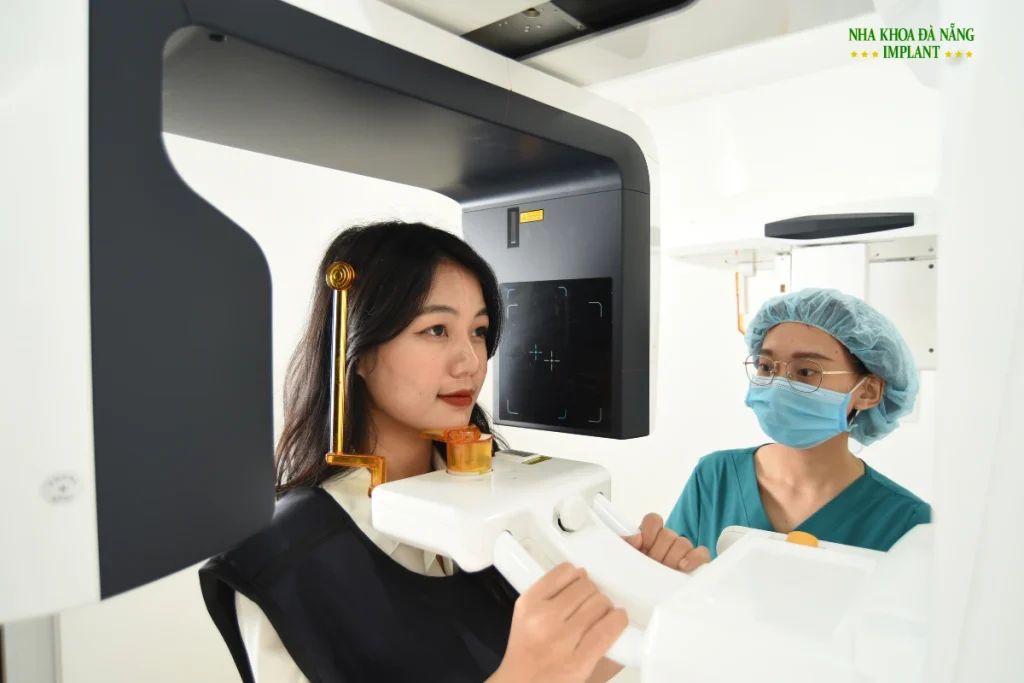
CT Scan at Da Nang Implant Dental Clinic
If pain returns, swelling develops, a pus-filled bump appears, or a filling breaks, contact your dentist promptly rather than waiting for your next orthodontic appointment.
Yes, provided the tooth meets the necessary conditions for orthodontic treatment.
Orthodontic tooth movement involves the periodontal ligament and bone remodeling around the tooth. Having undergone root canal treatment does not automatically prevent a tooth from being moved orthodontically.
However, the dentist must still assess tooth stability, remaining tooth structure, restoration quality, root condition, and supporting periodontal tissues.
Teeth with vertical root fractures, severe loss of periodontal support, or damage that makes restoration impossible may require alternative treatment approaches.
The important consideration is not simply whether root canal treatment has been completed, but whether the tooth is healthy and stable enough to withstand orthodontic forces and be monitored throughout treatment.
The overall orthodontic treatment duration may change if tooth movement needs to be temporarily suspended or the force system must be adjusted. However, not every case will result in a significant delay.
Can Root Canal Treatment Prolong Orthodontic Treatment?
The degree of impact depends on the tooth’s position, its role in the orthodontic plan, and the time needed for the dental condition to stabilize.
After evaluation, the dentist may update the treatment timeline accordingly.
Root canal treatment should not be delayed simply to maintain the originally scheduled braces removal date. Timely management of dental disease is essential for preserving the tooth and maintaining long-term treatment outcomes.
Clean thoroughly but gently: Brush with fluoride toothpaste and carefully clean around brackets and between teeth using appropriate oral hygiene tools.
Protect the tooth being restored: Avoid biting hard foods with a tooth that has a temporary filling or has not yet been fully restored.
Follow orthodontic instructions: Do not independently increase elastic force, change your aligner replacement schedule, or stop wearing your appliances for extended periods.
Attend follow-up appointments for both treatments: The absence of pain alone does not necessarily mean the tooth has fully stabilized.
Ensure communication between your dentists: If root canal treatment and orthodontic treatment are performed at different clinics, provide relevant X-rays, treatment summaries, and instructions to support proper coordination.
Not necessarily. After assessing access to the affected tooth and the ability to isolate it properly, the dentist will determine whether any orthodontic appliances in the treatment area need to be adjusted or temporarily removed.
Not every root canal-treated tooth requires the same type of restoration. The appropriate treatment depends on the tooth's position, the amount of remaining tooth structure, and the forces it experiences during chewing.
The endodontist, restorative dentist, and orthodontist should coordinate the type and timing of the restoration. A weakened tooth should not be left unprotected simply because orthodontic treatment is still ongoing.
The absence of pain alone does not mean orthodontic forces can safely be reapplied. The dentist must evaluate the condition of the treated tooth and the tissues surrounding its root before resuming tooth movement.
If root canal treatment is clinically indicated, it should not be delayed simply because you are wearing braces. Consult your dentist and orthodontist to coordinate the necessary treatment and adjust your orthodontic plan accordingly.
Root canal treatment during orthodontic treatment requires a well-coordinated approach: accurate diagnosis, effective management of dental disease, protection of the affected tooth, and appropriate timing for resuming tooth movement.
Can Root Canal Treatment Prolong Orthodontic Treatment?
If you are wearing braces and experience persistent tooth pain, unusual sensitivity, or gum swelling, you can contact Da Nang Implant Dental Clinic to schedule a dental examination.
Please bring your orthodontic records and any available dental X-rays so the dentist can better assess your condition and recommend an appropriate treatment approach.
DA NANG IMPLANT DENTAL CLINIC
Address: 420 2/9 Street, Hoa Cuong Ward, Da Nang City, Vietnam
Hotline: (+84) 899 412 412
Email: cskh@nhakhoaimplantdanang.com
Ngày: 30/11/2023
Ngày: 08/05/2026

Ngày: 27/11/2025
Ngày: 27/04/2026
Ngày: 05/10/2026