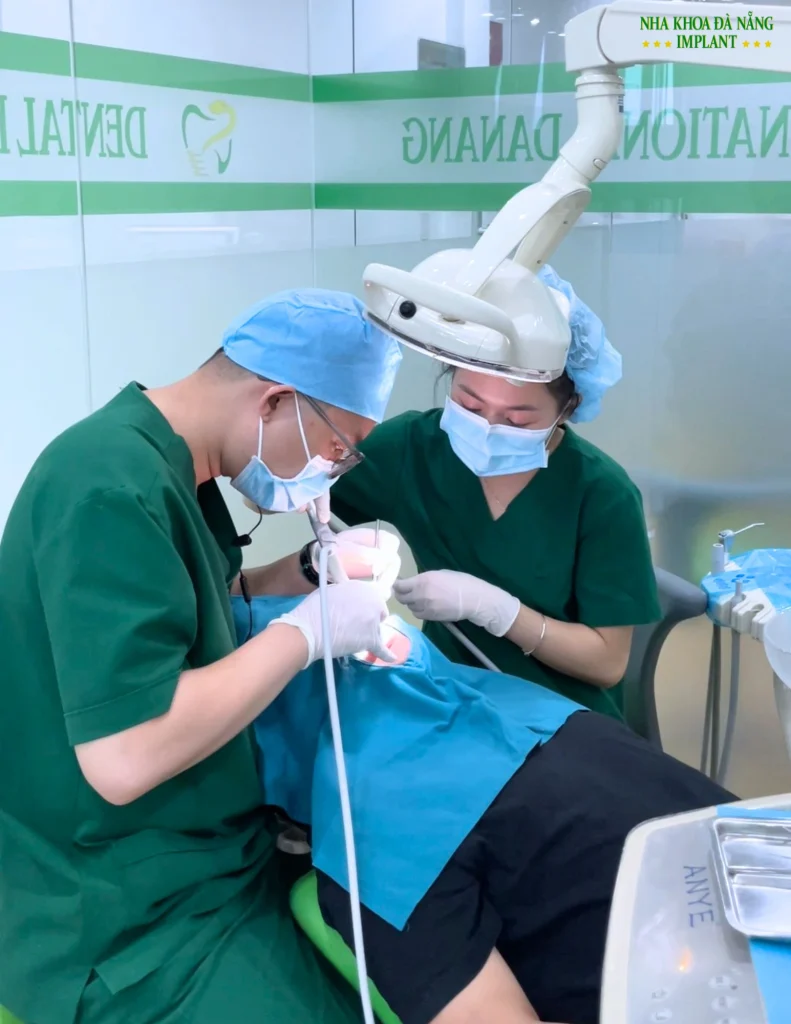
A severely decayed tooth, persistent toothache, or a tooth with only part of the crown remaining may make many people think extraction is the only option. On the other hand, some people try to keep a severely damaged tooth because they are concerned that tooth loss may affect chewing and appearance.
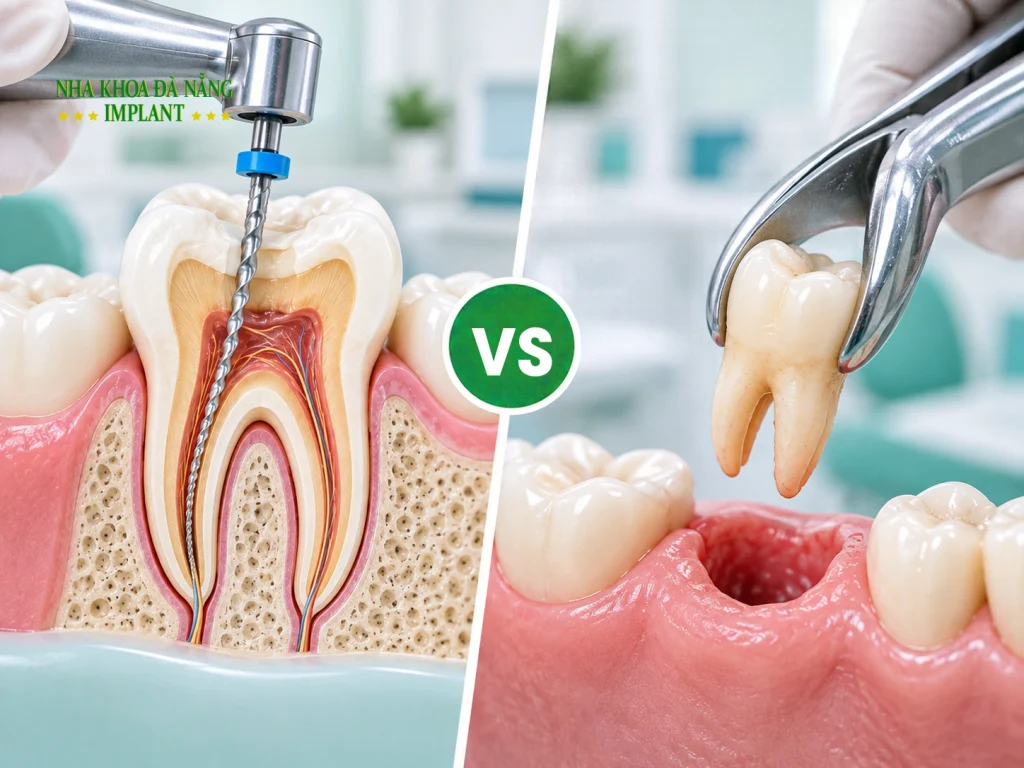
Root Canal Treatment or Tooth Extraction
So, should you have root canal treatment or tooth extraction? A tooth may still have a good chance of being preserved when the infection can be controlled, the roots and supporting tissues remain in acceptable condition, and the remaining tooth structure can be restored securely. If the tooth can no longer be predictably restored or has a very poor prognosis, extraction may be the more appropriate option.
Let’s explore with Da Nang Implant Dental Clinic the main factors that determine whether a natural tooth can still be preserved before choosing treatment.
Root canal treatment, also known as endodontic treatment, involves removing inflamed or infected pulp tissue, then cleaning, shaping, and sealing the root canal system. The goal is to treat disease inside the tooth while keeping the natural tooth in the dental arch.
Tooth extraction means removing the tooth from its socket. When a tooth can no longer be preserved, the dentist may recommend extraction and discuss whether the missing tooth should later be replaced.
An important point to remember is that root canal treatment treats disease inside the tooth, but it does not restore the tooth structure that has already been lost. For a tooth to remain functional in the long term, its restorability and ability to withstand chewing forces must also be assessed.
Severe tooth pain does not necessarily mean that the tooth must be extracted. If the problem mainly involves the pulp and the tooth is still restorable, root canal treatment may be recommended.
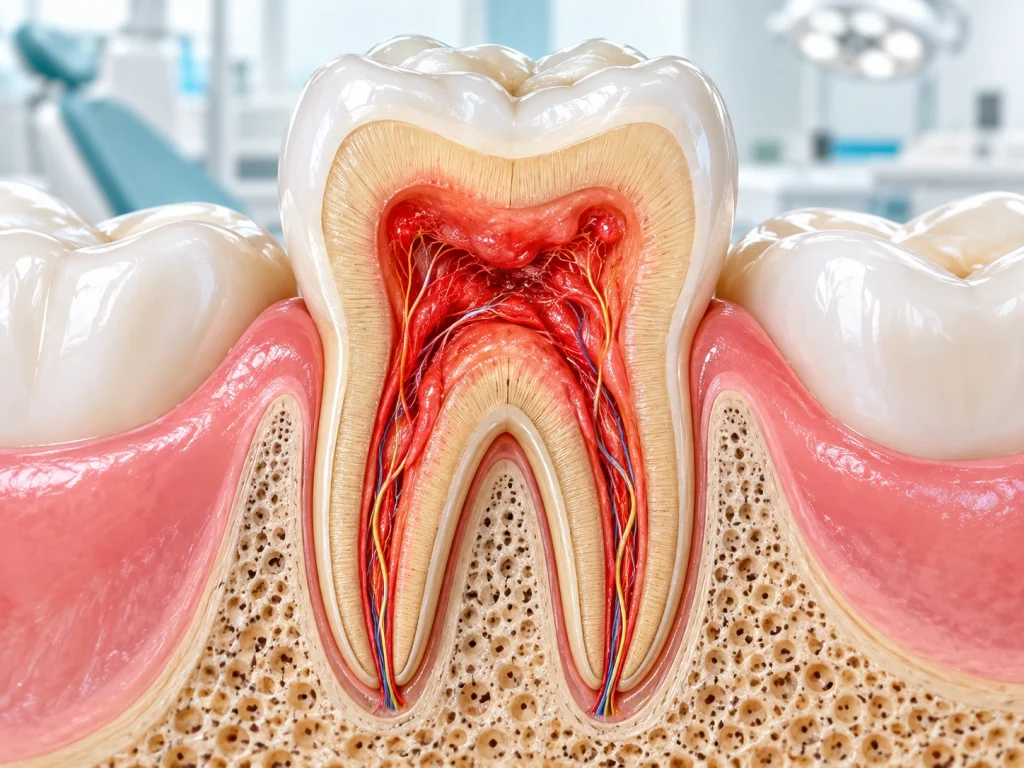
The pulp is inflamed or infected but the tooth can still be restored
Symptoms that should be evaluated by a dentist include:
These symptoms can indicate a dental problem, but they are not enough to determine on your own whether root canal treatment or extraction is needed. A dentist must perform a clinical examination and take appropriate X-rays to identify the cause.
The possibility of saving a tooth depends greatly on how much healthy tooth structure remains after decay or damaged tissue has been removed.
The dentist will assess whether the tooth can be restored with a secure seal, adequate strength, and sufficient resistance to chewing forces. Some teeth with damage extending close to the gum line may require additional procedures before restoration, and not every case is suitable.
Therefore, a tooth that appears severely broken above the gum line may still be salvageable, while a root that remains beneath the gum does not automatically mean the tooth can be preserved.
For a tooth to remain stable, it needs healthy supporting structures around it, including the gums, periodontal ligament, and alveolar bone.
If the supporting tissues remain healthy or periodontal disease can be controlled, preserving the tooth may still be considered. In contrast, even successful root canal treatment may have a poor long-term prognosis if too much supporting tissue has already been lost.
Pain returning after previous root canal treatment does not automatically mean the tooth must be extracted. In some cases, the problem may be related to untreated canals, leakage around a restoration, or new tooth decay.
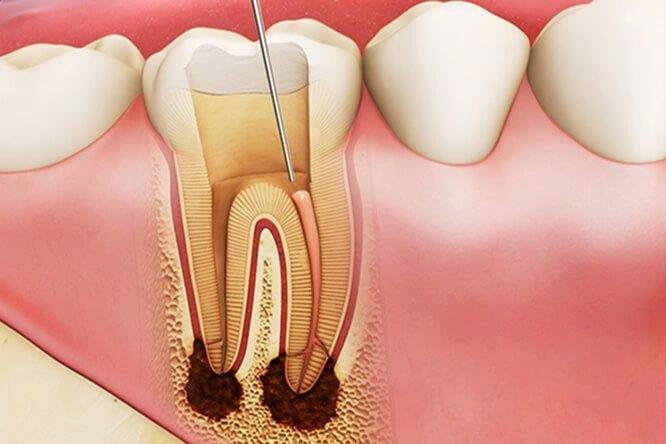
A previously root canal-treated tooth may still be retreated
Depending on the cause, the dentist may consider root canal retreatment. When conventional retreatment is not sufficient, endodontic surgery may also be an option in selected cases.
If the damage extends deeply into the root, too little healthy tooth structure remains, or a secure and durable restoration cannot be achieved, root canal treatment alone may not provide a reliable long-term result.
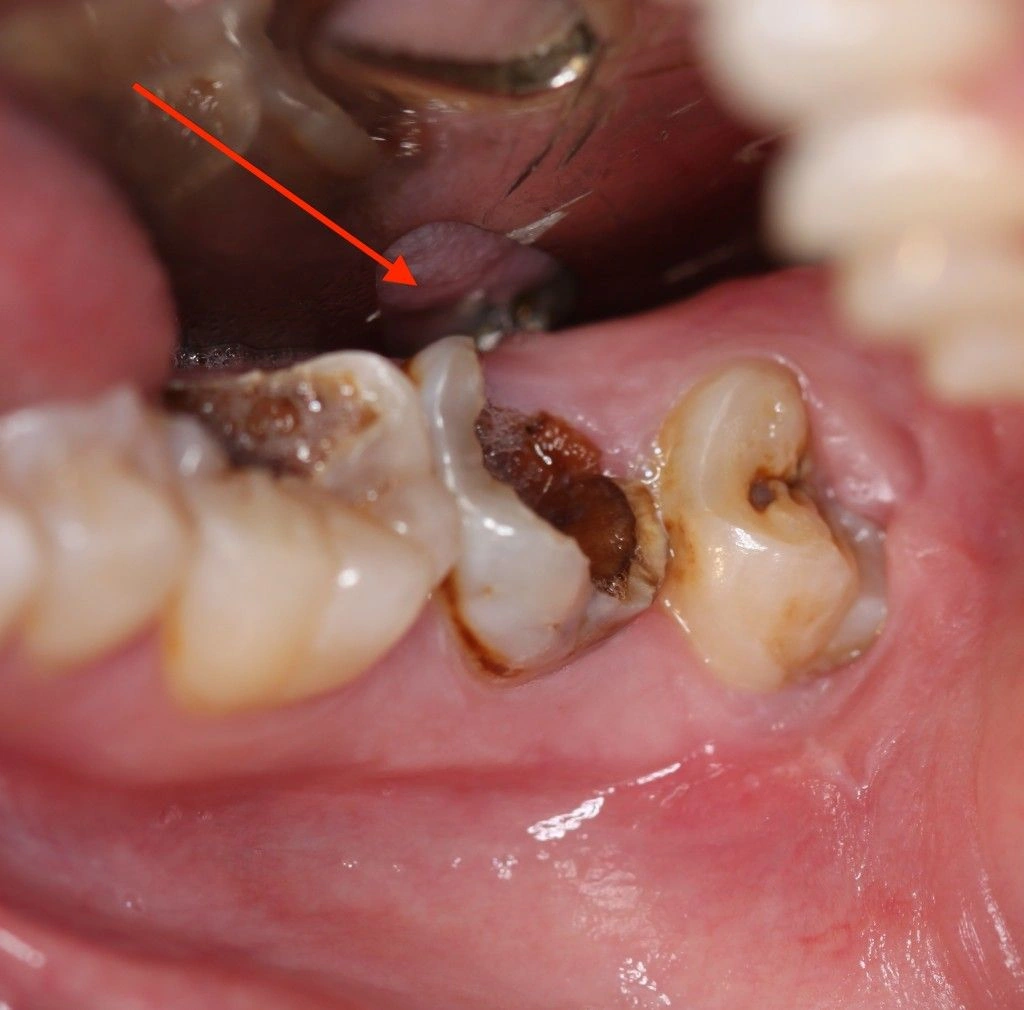
A severely decayed or broken tooth
Vertical root fractures generally have a poor prognosis. A single-rooted tooth with this type of fracture often needs to be extracted. In certain multi-rooted teeth, a specialist may evaluate whether the fractured root can be removed while preserving the remaining part of the tooth.
Not all cracks are the same. Their location, direction, and extent play an important role in determining treatment.
A tooth that is highly mobile because of advanced periodontal disease, significant bone loss, and insufficient support to maintain function may need to be extracted. Root canal treatment cannot correct mobility caused by severe loss of periodontal support.
If retreatment is not feasible or the remaining conservative treatment options have a poor prognosis, the dentist may recommend extraction to eliminate the source of infection.
The decision should be based on the overall condition of the tooth rather than pain severity alone.
| Factor | Root Canal Treatment to Save the Tooth | Tooth Extraction |
|---|---|---|
| Treatment indication | The tooth can be treated and restored with an acceptable prognosis | The tooth cannot be predictably restored or has a very poor prognosis |
| Treatment goal | Preserve the natural tooth and chewing function | Remove the tooth when extraction is indicated |
| Further treatment | Restore the tooth and continue follow-up | Evaluate whether the missing tooth should be replaced |
| Costs to consider | Root canal treatment plus the final restoration | Extraction plus tooth replacement if required |
When comparing the options, ask your dentist to explain the entire treatment plan, including prognosis, treatment time, cost, and any procedures that may be needed afterward.
After extraction, replacement options may include a dental bridge, removable denture, or dental implant. In some situations, replacement may not be necessary. The most suitable option depends on the tooth position, bite, and individual oral condition.
Pain severity alone does not determine whether a tooth can be saved. A tooth with severe pain may still be treatable with root canal therapy, while a tooth with little pain may already have significant structural damage.
A dental abscess requires prompt treatment, but not every abscess requires extraction. Depending on the source of infection and the condition of the tooth, treatment may include drainage, root canal treatment, or extraction.
Antibiotics should not be used as a substitute for treating the underlying cause.
After root canal treatment, the tooth usually needs an appropriate restoration. Depending on the remaining tooth structure and chewing forces, the dentist may recommend a filling, onlay, or crown.
Until the final restoration is completed, avoid biting hard foods with the treated tooth.
You should arrange a dental examination if you experience persistent tooth pain, pain when biting, swollen gums, pus, or a broken tooth.
If you develop significant swelling in the mouth, difficulty breathing, difficulty swallowing, or painful swelling around the eye, seek emergency medical care immediately. These may be signs of a serious infection requiring urgent treatment.
Preserving a natural tooth should always be considered together with its restorability and long-term prognosis. The key question is whether the tooth can remain stable and functional after treatment.
If you are unsure whether you need root canal treatment or tooth extraction, schedule an examination at Da Nang Implant Dental Clinic to have your tooth evaluated and discuss the most appropriate treatment option.
Before making a decision, ask your dentist three important questions: Can this tooth still be saved? What treatment steps will be required? What is the long-term prognosis?
A well-informed decision begins with a clear understanding of the condition of your tooth.

Ngày: 19/04/2025

Ngày: 26/10/2023
Ngày: 20/10/2026
Ngày: 16/10/2026

Ngày: 14/10/2026
Ngày: 13/10/2026