When exploring different dental implant systems, you may come across terms such as Acqua, TiUnite, SLActive, or XPEED. These are surface treatment technologies developed to support the interaction between dental implants and bone tissue after implant placement.
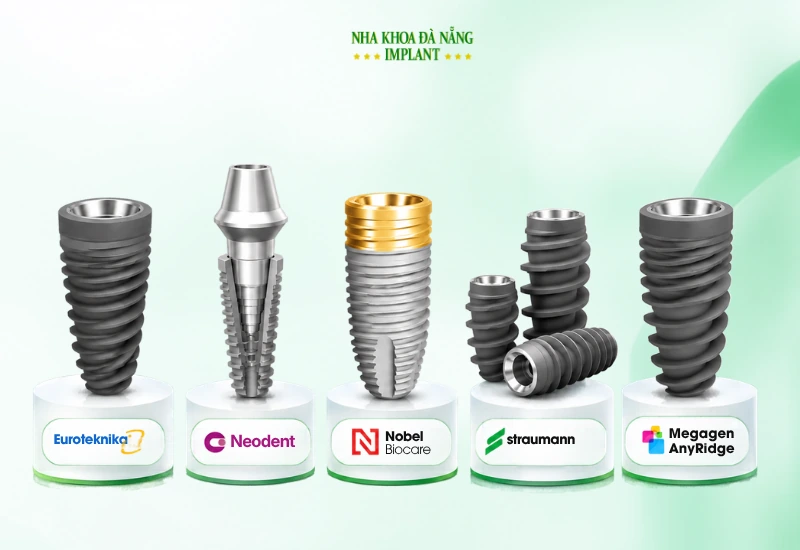
Review of 5 Dental Implant Systems
So, what are the characteristics of each technology? Can hydrophilic surfaces shorten treatment time for everyone? And what criteria should you consider when choosing the right dental implant?
Join Da Nang Implant Dental Clinic as we explore five options: Euroteknika, Neodent Acqua, Nobel Biocare, Straumann, and Megagen AnyRidge, focusing on their surface technologies and their significance in restoring missing teeth.
This article is for informational purposes and is not a ranking. Some names refer to brands or implant systems, while STAE, Acqua, TiUnite, TiUltra, SLA, SLActive, and XPEED refer to surface technologies. The actual characteristics should be verified against the specific implant model prescribed.
A dental implant is a component placed into the jawbone to replace a missing tooth root. The surface that comes into contact with bone tissue is not simply a smooth layer of metal. Depending on the product, manufacturers may treat the implant surface to modify:
Surface roughness and microstructure.
Wettability, also known as hydrophilicity.
The chemical composition and properties of the surface.
After implant placement, the body begins the healing process. Blood and biological components come into contact with the implant surface. Over time, new bone tissue forms and bonds with the implant. This process is known as osseointegration.
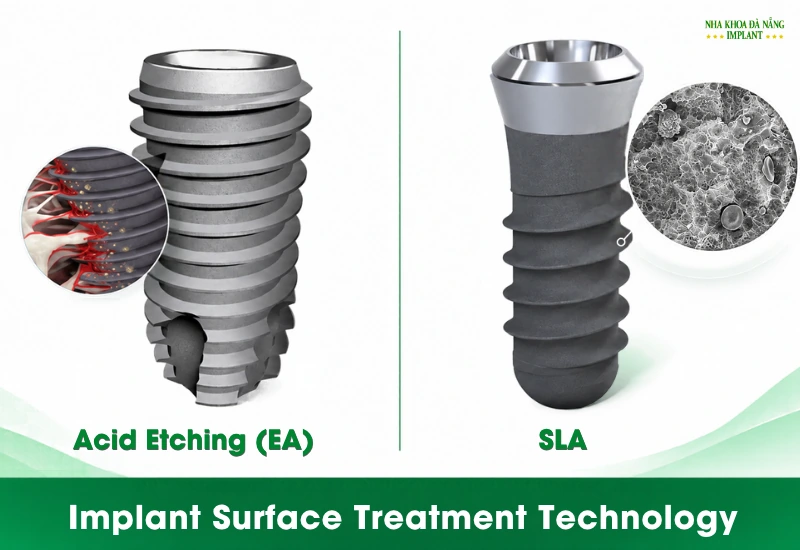
Implant Surface Treatment Techology
During this process, dentists focus on two types of stability:
Primary stability: The mechanical stability of the implant immediately after placement into the bone. This is influenced by bone quality, implant design, and how the implant site is prepared.
Biological stability: Develops gradually during healing as bone regenerates and bonds with the implant surface.
Surface technology is one factor that supports biological interactions. However, treatment outcomes also depend on bone condition, implant treatment planning, overall health, and post-treatment care.
Micro-rough surfaces: Created using methods such as sandblasting and acid etching. The small structures on the surface are designed to facilitate interactions with bone tissue.
Hydrophilic surfaces: Allow liquids to spread more easily across the surface. Some manufacturers incorporate this characteristic into their designs to support the early healing phase.
Chemically modified surfaces: Certain technologies modify the titanium oxide layer or incorporate additional elements, such as calcium, into the surface structure to influence how the implant interacts with the biological environment.
Each surface treatment approach has its own objective. However, it cannot be concluded that one implant system is better for everyone based solely on a single surface characteristic.
| Brand / Implant System | Representative Surface | Main Technology | Important Considerations |
|---|---|---|---|
| Euroteknika | STAE on selected models, such as Naturactis and Naturall+ | Titanium oxide particle blasting and acid etching to create a micro-rough surface | The specific implant model must be identified; not all products from the brand should be assumed to have identical characteristics. |
| Neodent | Acqua on selected models, such as Helix GM Acqua | Hydrophilic surface developed from NeoPoros technology | Acqua is a surface technology name; it does not mean immediate restoration is suitable for every case. |
| Nobel Biocare | TiUnite or TiUltra | Electrochemical surface treatment through anodization | Different Nobel implant models may use different surface technologies. |
| Straumann | SLA or SLActive | Sandblasting and acid etching; SLActive is modified to be hydrophilic | Roxolid is an implant material, while SLA and SLActive are surface technologies. |
| Megagen AnyRidge | XPEED | Surface treatment incorporating calcium at a very small structural scale | The XPEED surface is different from the KnifeThread design of the AnyRidge implant. |
This table helps identify technical characteristics. It does not represent a direct comparison of clinical effectiveness among the five implant systems in the same patient population.
Euroteknika is a French dental implant brand belonging to the LYRA ETK group. Some of its products, such as Naturactis and Naturall+, use the STAE surface.
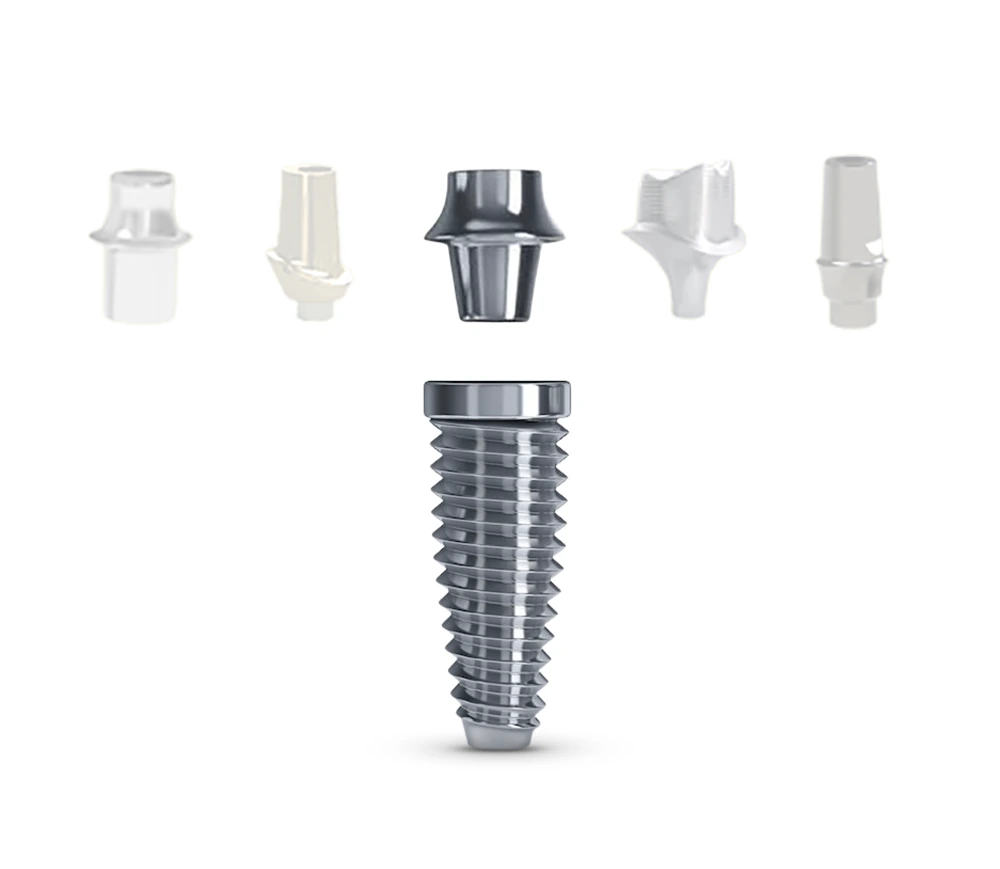
Euroteknika Implants
According to the manufacturer, the STAE surface is created through two main steps:
Titanium oxide particle blasting: Creates a rough structure on the implant surface.
Acid etching: Creates additional small structures on the previously blasted surface.
This combination produces a micro-rough surface designed to support interactions between the implant and bone tissue during healing.
You can think of this as creating a structured contact surface rather than leaving the implant completely smooth. However, this does not mean that a rougher surface is always better, as treatment outcomes depend on multiple product characteristics and clinical conditions.
For certain Euroteknika implants that use STAE, the surface is designed to support osseointegration. However, healing time and the timing of the final restoration must still be determined by the dentist based on each patient’s individual condition.
Neodent is a brand founded in Brazil and is part of the Straumann Group. Acqua is the name of a surface technology used on selected implant models, such as Helix GM Acqua.
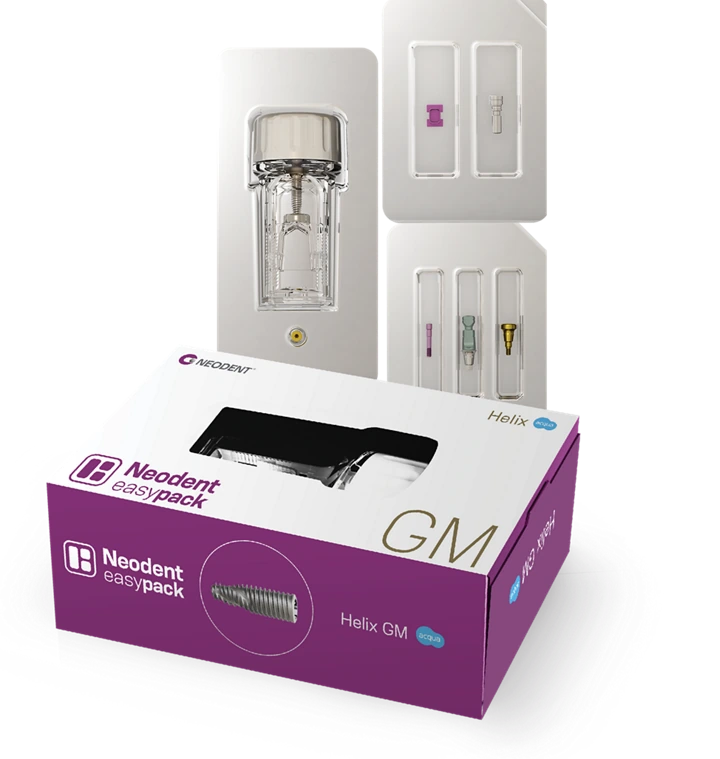
Neodent Acqua Implants
Acqua is a hydrophilic surface that Neodent describes as being developed from its NeoPoros surface technology.
NeoPoros uses particle blasting and acid etching to create a rough surface structure. Acqua builds on this foundation by incorporating hydrophilic properties into the surface design.
Simply put, when a surface is hydrophilic, liquids tend to spread across it more easily. In dental implantology, this property is studied because it may influence early interactions between the implant, blood, and biological components.
The Acqua surface was developed to support healing and osseointegration. Dentists may consider this characteristic alongside implant design and bone condition when planning treatment.
However, individual outcomes are not determined by surface characteristics alone.
A small randomized study involving 16 patients with complete tooth loss in the lower jaw compared narrow-diameter implants with Acqua and NeoPoros surfaces. After one year, the researchers found no statistically significant differences in peri-implant healing, implant stability, or bone changes within the study population.
These findings are not sufficient to conclude that the two surfaces are equivalent in all clinical situations.
Immediate restoration may be considered in certain cases, but it is not suitable for everyone. The dentist must evaluate primary stability, bone condition, occlusion, and the proposed restoration.
Some patients may require a longer healing period or additional treatment before the restoration can be placed.
Nobel Biocare offers several dental implant systems. Names such as NobelActive may be associated with different surface technologies.
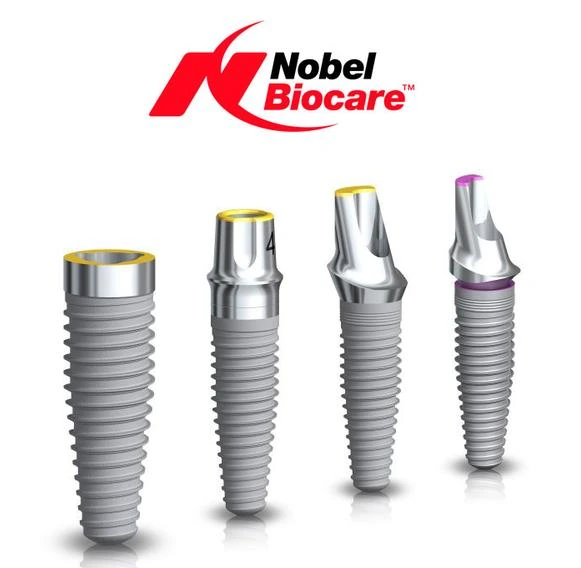
Nobel Biocare Implants
Two notable surfaces are TiUnite and TiUltra.
Nobel Biocare is headquartered in Switzerland and has manufacturing facilities in multiple countries. The origin of the implant used for each patient should be verified on the product label.
TiUnite is a surface created through anodization, an electrochemical treatment method that modifies the oxide layer on the titanium surface.
This layer has a microstructure and roughness designed to support the bonding of bone to the implant. TiUnite is used on certain versions of NobelActive implants.
According to Nobel Biocare’s documentation, TiUnite is a technology that has been studied over a long period.
When reviewing research data, readers should consider the specific implant model studied, the duration of follow-up, and the characteristics of the patient population.
TiUltra also uses anodization technology and is designed with:
High hydrophilicity.
A surface structure that varies by region: The implant neck and the body toward the apex have different surface characteristics.
This design aims to create interaction zones suited to the surrounding tissue conditions in different parts of the implant.
TiUltra is available on selected Nobel implant models, including NobelActive TiUltra.
An important distinction: Long-term follow-up studies on NobelActive TiUnite do not automatically provide evidence of an equivalent follow-up duration for NobelActive TiUltra. Each surface must be evaluated according to its specific product and corresponding research data.
When researching Straumann implants, you may encounter the terms SLA, SLActive, and Roxolid. These do not all refer to the same type of technology:
SLA and SLActive: Names of surface technologies.
Roxolid: The name of a titanium–zirconium alloy material used in certain implants.
An implant model may be described using both its material and surface technology, such as Roxolid SLActive.
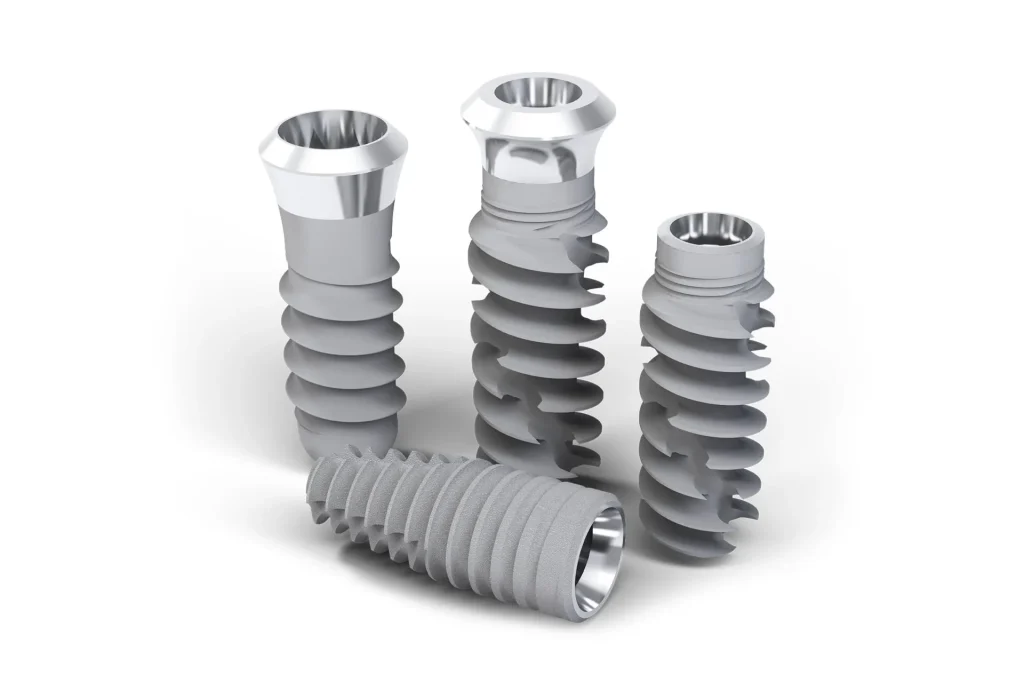
Straumann Implants
According to Straumann, SLA is created through large-grit blasting followed by acid etching.
These two steps produce rough surface structures at different scales, designed to support interactions between bone tissue and the implant.
SLA is one of the surfaces with long-term clinical follow-up data. Nevertheless, treatment effectiveness must still be evaluated according to the specific implant model and each patient’s clinical condition.
SLActive is a surface modified from the SLA platform to provide hydrophilic properties. Its manufacturing and storage processes are designed to maintain these surface characteristics before use.
From a biological perspective, this technology was developed to support early interactions and healing processes.
However, hydrophilicity does not guarantee that one patient will complete treatment faster than another.
A systematic review of clinical trials comparing hydrophilic surfaces with conventional sandblasted and acid-etched surfaces found no clear clinically significant differences in implant stability or survival rates across the included studies.
The authors also noted limitations in the available evidence, including small sample sizes and differences between studies.
AnyRidge is a dental implant system developed by Megagen, a South Korean brand.
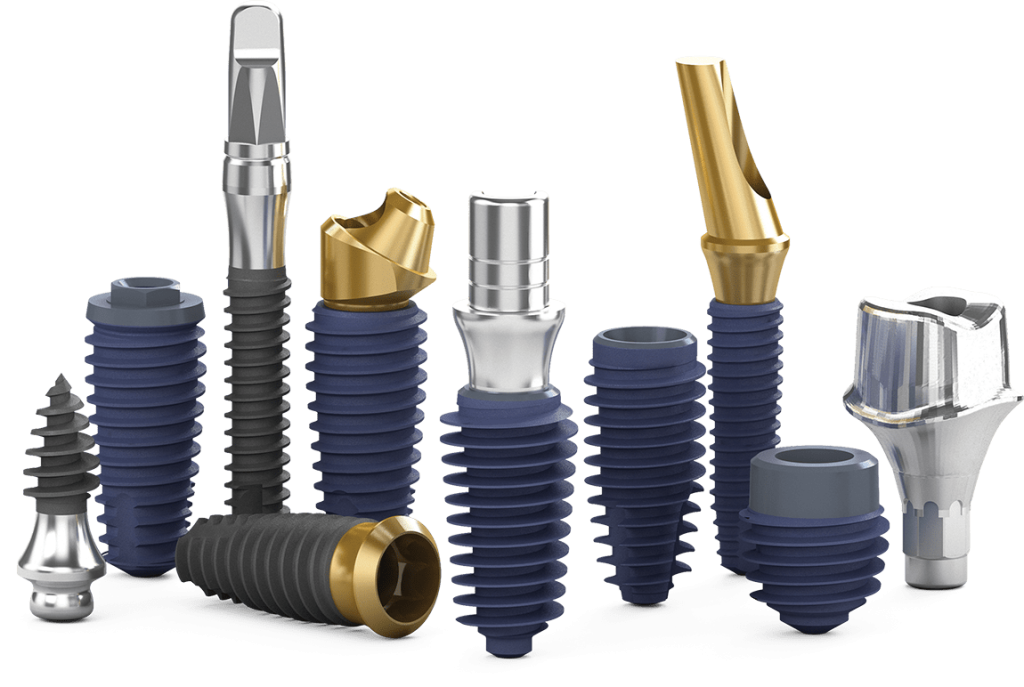
Megagen AnyRidge Implants
When researching this implant system, you will often encounter two terms: XPEED and KnifeThread.
These two features should be distinguished:
XPEED: The implant surface treatment technology.
KnifeThread: The thread design on the implant body.
Thread design relates to how the implant interacts mechanically with bone during placement. Meanwhile, the XPEED surface is intended to support biological interactions during post-implant healing.
According to Megagen’s documentation, XPEED is a treated surface that incorporates calcium into the implant surface structure at a very small scale.
The goal is to facilitate interactions between the implant surface and bone tissue.
This does not mean that XPEED implants supplement calcium throughout the body or that patients no longer need to pay attention to their bone health.
Implant surface technology and the patient’s overall health are two separate considerations.
A small randomized trial with follow-up of up to five years compared implants with XPEED surfaces against a group of implants treated with a different particle-blasting method.
Both groups demonstrated favorable clinical outcomes under the study conditions, with no statistically significant differences in the evaluated outcomes.
Some participants did not complete the follow-up period, and the study was partially supported by the manufacturer. Therefore, its findings should be interpreted within the limitations of the research.
Surface technology should be considered as part of an overall treatment plan.
To select a suitable dental implant, the dentist needs to evaluate several factors simultaneously.
The height, width, and quality of bone at the missing tooth site influence the implant treatment approach.
The dentist may recommend a Cone Beam CT scan when necessary to assess the bone and surrounding anatomical structures.
If the bone is insufficient, you may be advised to undergo bone grafting or consider another treatment option.
Choosing an implant with a special surface does not eliminate the need for bone assessment or additional bone-related procedures.
Restoring a front tooth may involve significant aesthetic requirements, while replacing a molar requires careful consideration of chewing forces.
For patients missing multiple teeth or an entire arch, the number of implants and restoration design must also be considered.
Periodontal inflammation, oral hygiene, smoking, systemic diseases, and medications may affect treatment planning or the healing process.
You should provide complete information so that the dentist can properly evaluate your condition before implant placement.
Ask whether the total cost includes the dental implant fixture, abutment, and crown or other implant-supported restoration.
Additional costs for diagnostic imaging, bone grafting, sinus lifting, and other treatments—if required—should also be clearly explained in the treatment plan.
This cannot be concluded for every case.
Hydrophilicity is a characteristic studied for its potential to support early healing. Its actual benefits depend on the implant type, bone condition, and treatment protocol.
The implant surface can contribute to osseointegration, but healing time also depends on overall health, bone quality, primary stability, and any additional treatments.
The dentist must monitor healing to determine the appropriate time for restoration.
No surface technology can guarantee that an implant will last a lifetime for every patient.
Oral hygiene, management of risk factors, and regular follow-up visits play important roles in long-term implant care.
You can ask the dental clinic to provide the full name of the implant system, the specific implant model, its surface technology, and the information shown on the product label.
Keep your treatment records or implant identification card as instructed to facilitate future follow-up care.
Each dental implant system has its own characteristics. What matters most is whether the selected implant is suitable for the patient’s bone condition, restoration needs, and overall health.
At Da Nang Implant Dental Clinic, you can discuss the location of missing teeth, the restoration process, the recommended implant system, and any concerns you may have with the dentist before making a decision.
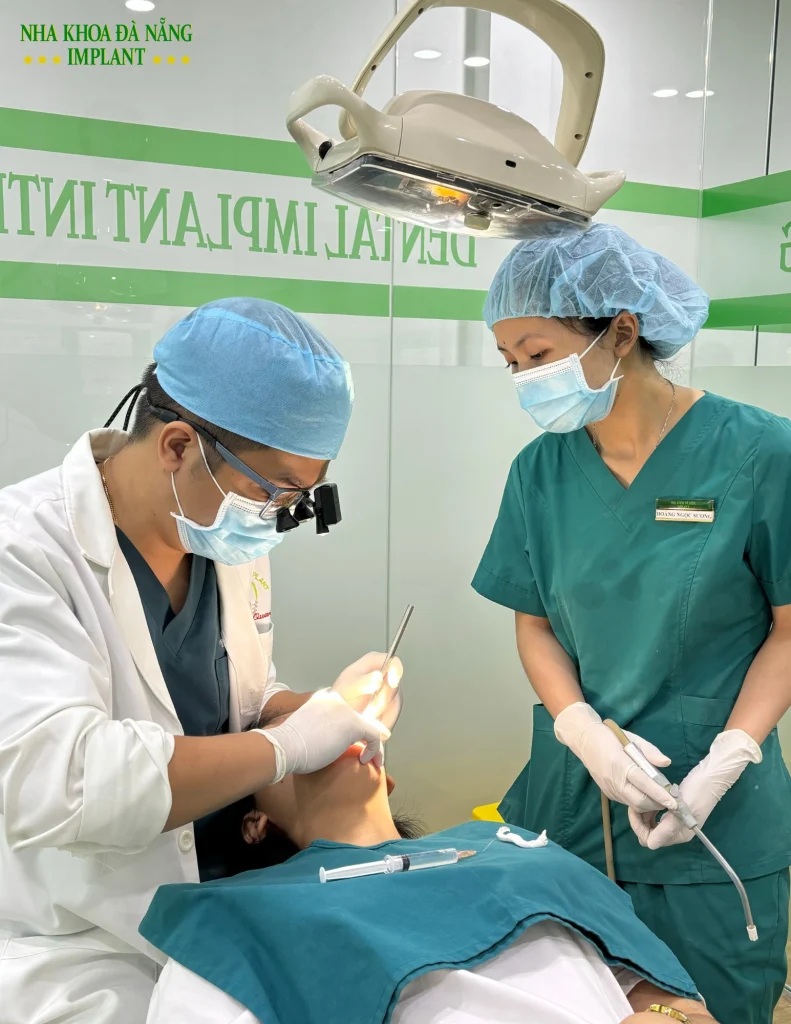
💚 Contact Da Nang Implant Dental Clinic for an examination and consultation to develop a dental implant treatment plan tailored to your individual condition.
This article is for informational purposes only and does not replace a dentist’s direct examination, professional advice, or treatment recommendations.
DA NANG IMPLANT DENTAL CLINIC
Address: 420 2 Thang 9 Street, Hoa Cuong, Da Nang, Vietnam
Hotline: (+84) 899 412 412

Ngày: 10/02/2026

Ngày: 30/07/2026
Ngày: 08/10/2026
Ngày: 13/10/2026