
Dental veneers are a popular choice for improving discolored teeth, minor gaps, chips, or uneven tooth shapes. Compared with dental crowns, veneers generally preserve more natural tooth structure while providing a natural-looking aesthetic result.
However, before getting dental veneers in Da Nang, many patients still have concerns: Do veneers weaken natural teeth? Do teeth need to be shaved down? How long do veneers last? How can you choose a safe and reliable dental clinic?
The answer is: Dental veneers can be safe when they are properly indicated, performed by a qualified dentist, and carried out according to appropriate quality-control protocols. On the other hand, if veneers are placed incorrectly or applied to teeth that are not suitable for this treatment, patients may experience sensitivity, gum inflammation, veneer debonding, or damage to the natural teeth.
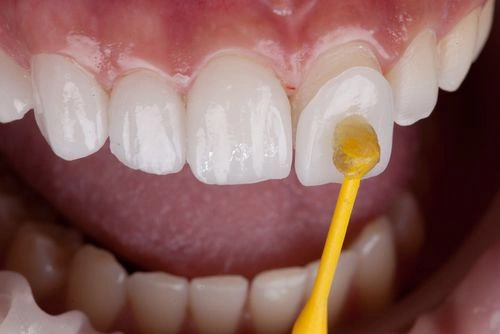
Veneers are thin layers of material, usually ceramic, bonded to the front surface of teeth to improve their color, shape, and certain aesthetic imperfections.
What Are Dental Veneers?
Because veneers mainly cover the front surface of the teeth, they usually require less tooth reduction than full-coverage crowns. However, the amount of tooth preparation varies from case to case. Some patients may require only minimal enamel preparation, while others may need more adjustment to prevent the veneers from appearing too thick or protruding.
Some types of veneers require the removal of a small amount of tooth structure, while others may require little or no preparation. Therefore, patients should undergo a direct dental examination before choosing a treatment option.
Dental veneers are not considered a dangerous treatment when performed correctly by qualified dental professionals. Their safety depends on four important factors:
Before placing veneers, the dentist needs to assess the enamel, bite, gums, tooth decay, and any teeth-grinding habits. Existing oral health problems should be treated or controlled before restorative treatment begins.
The American Dental Association notes that placing veneers on teeth affected by decay or gum disease may worsen existing problems. Patients who grind their teeth or have a deep bite may also face a higher risk of veneer cracking, fracture, or debonding.
Enamel provides an important foundation for strong veneer bonding. Therefore, a key principle of safe veneer treatment is to minimize invasiveness and remove only the amount of tooth structure necessary.
“Minimal tooth reduction” does not mean that every patient is suitable for no-prep veneers. If the teeth protrude, are significantly misaligned, or have a very dark underlying shade, the dentist must balance aesthetics, durability, and preservation of natural tooth structure.
Even a beautiful veneer can cause discomfort or become prone to fracture if the bite is not properly designed. The dentist needs to evaluate jaw movements, contact points between the teeth, and the forces placed on the front teeth.
Veneers that are too long, too thick, or have abnormal contact points may cause a bulky sensation, difficulty speaking, or discomfort while chewing.
The tooth surface must be properly prepared, isolated, and bonded under suitable conditions. Poor moisture control or incorrect bonding techniques may weaken the bond between the veneer and the tooth, increasing the risk of debonding or marginal leakage.
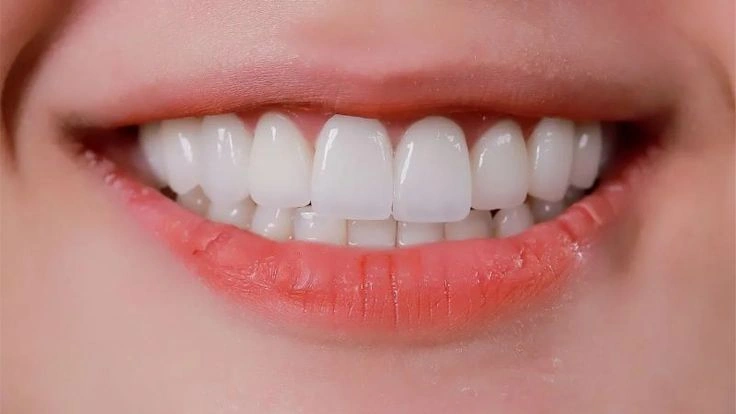
Veneers themselves do not automatically damage natural teeth. Risks are more commonly associated with inappropriate case selection, excessive tooth preparation, untreated dental problems, or improper care after treatment.
Do Dental Veneers Damage Natural Teeth?
Patients should understand that most veneer procedures involving enamel removal are considered long-term and generally irreversible. Once part of the enamel has been removed, the tooth cannot be completely restored to its original condition.
Potential issues may include:
Therefore, instead of simply asking, “Are veneers harmful?”, patients should consider a more important question: Are my teeth actually suitable for veneers?
Dentists may consider veneers for patients with:
Whether veneers are suitable still depends on a clinical examination. If the teeth are significantly misaligned, the bite is complex, or a large amount of tooth structure has been lost, the dentist may recommend orthodontics, crowns, or another restorative option.
Veneers may not be suitable when a patient has:
In these situations, existing dental conditions should be treated or the bite stabilized before veneer treatment. Long-term oral health should not be compromised simply for faster aesthetic results.
Every patient has a different dental condition and level of sensitivity. Therefore, veneer reviews should be considered reference information only and cannot replace a dentist’s diagnosis.
Below are some of the most common concerns patients have throughout the treatment process.
Patients are typically assessed for the condition of their teeth, gums, and bite. Dental imaging may be recommended when necessary. The dentist will also discuss the desired tooth color, shape, and number of teeth to be restored.
This stage is extremely important. A good treatment plan should not simply create whiter teeth; it should also complement the patient’s facial features, skin tone, smile line, and individual style.
For suitable cases, the dentist may only need to adjust a thin layer of the tooth surface. Some patients experience little or no discomfort, while those with sensitive teeth may notice mild sensitivity.
Patients should be cautious of claims that every veneer case requires “no tooth shaving” or causes “absolutely no sensitivity.” The amount of preparation depends on the original tooth structure and the desired smile design.
Before final bonding, patients should check:
Patients should communicate any concerns before the veneers are permanently bonded, as changes to the shape and color become more difficult afterward.
During the first few days, patients may need some time to adjust to the new shape and feel of their teeth. Mild sensitivity may occur but should gradually decrease.
If there is persistent pain, an uncomfortable bite, swollen or red gums, bad breath around the veneers, or loose veneers, patients should return to the dental clinic for an examination.
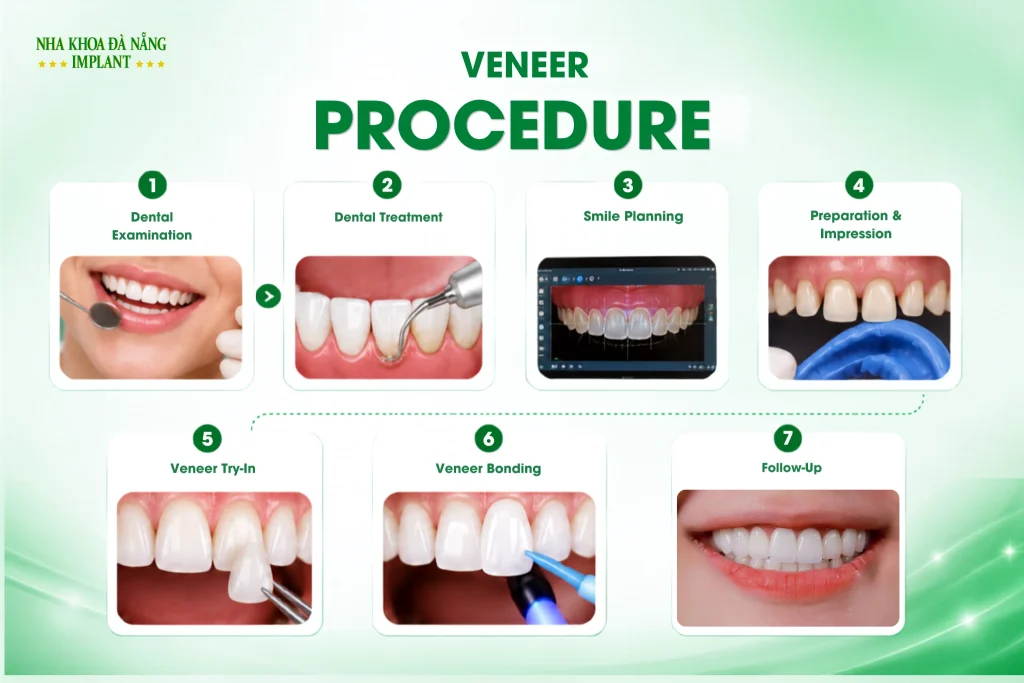
A typical dental veneer procedure in Da Nang may include the following steps:
Dental Veneer Procedure
The dentist evaluates the teeth, gums, remaining tooth structure, and bite. X-rays or other imaging data may be recommended depending on the individual case.
Tooth decay, gingivitis, and other oral health conditions should be treated before veneer placement. This is important for maintaining stable, long-term results.
The dentist and patient discuss the desired color, size, shape, and number of veneers. The design should be based on facial proportions and individual smile characteristics rather than simply copying a standard tooth shape.
The teeth are prepared according to the treatment plan. The dentist then takes a conventional impression or digital scan for veneer fabrication.
The dentist evaluates the fit, color, shape, gum margins, and bite. Patients should have an opportunity to view the veneers and provide feedback before final bonding.
The veneers are bonded to the teeth using specialized dental materials. The dentist then checks the bite, removes excess bonding material, and finishes and polishes the surfaces.
Follow-up appointments allow the dentist to assess gum adaptation, the bite, and the stability of the veneers.
A reliable clinic should not determine the number of veneers or confirm that a patient is suitable for veneers based only on smile photos. Treatment planning should be based on the actual condition of the teeth, enamel, gums, and bite.
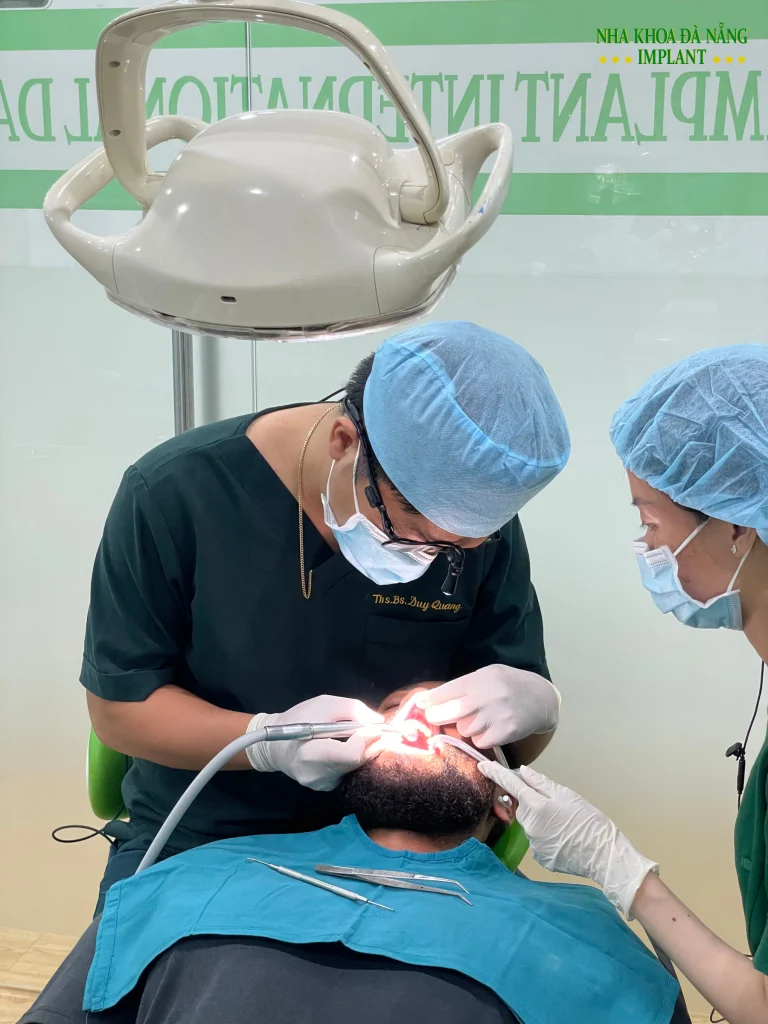
Veneer treatment requires expertise in tooth preparation, aesthetics, and occlusion. Patients should confirm that the person performing the examination, tooth preparation, and veneer bonding is a qualified dentist.
The ADA warns that procedures that alter the structure of the teeth, gums, or jawbone can cause irreversible damage when performed by unqualified individuals.
No-prep or minimal-prep veneers are suitable only for certain cases. When incorrectly indicated, the final teeth may appear too thick, protrusive, or unnatural.
Dental Veneer Treatment at Da Nang Implant Dental Clinic
Patients should ask their dentist:
Before-and-after photographs can help patients understand a clinic’s aesthetic approach. However, it is important to consider whether the images were taken from similar angles, under similar lighting conditions, and with comparable levels of editing.
A beautiful result does not necessarily mean the whitest possible teeth. Natural-looking veneers should have appropriate translucency, contours, color, and proportions that complement each individual face.
Patients should receive clear information about the type and origin of the ceramic material, treatment costs, number of teeth involved, treatment steps, and warranty conditions before proceeding.
It is also important to distinguish between a warranty for the veneer itself and the health of the underlying natural tooth. Tooth decay, gum disease, damage caused by teeth grinding, or biting hard objects may not be covered by the veneer warranty.
Dental veneers are a long-term decision that can affect natural teeth. Therefore, patients should prioritize accurate diagnosis and tooth-preserving treatment planning rather than choosing solely based on price.
The lifespan of veneers depends on the quality of the material, treatment technique, bite, eating habits, and oral hygiene.
According to Cleveland Clinic, veneers may last approximately 10–15 years with proper care. However, this is only an average estimate and not a guarantee for every patient. Veneers may still crack, chip, debond, or require replacement over time.
To help extend their lifespan, patients should:
The procedure may cause varying levels of sensitivity or discomfort depending on tooth sensitivity and the amount of preparation required. The dentist may use appropriate methods to manage discomfort when necessary.
Mild sensitivity can occur after treatment. However, increasing pain, pain when biting, or prolonged sensitivity should not be considered normal. These symptoms may indicate that the bite, veneer margins, or underlying tooth needs to be evaluated.
There is no single number that applies to every patient. The number of veneers depends on:
Some patients may only need one or two veneers to restore chipped teeth. Others who want to improve the entire visible smile zone may require more. The dentist should design the treatment so that there is no abrupt difference in color or shape between veneered teeth and natural teeth.
Dental veneers can be an effective way to improve a smile while preserving natural tooth structure when they are properly indicated and performed. However, veneers are not suitable for everyone and are not completely risk-free.
A successful result requires a balance of three important factors: the health of the natural teeth, proper chewing function, and natural-looking aesthetics. Patients should therefore undergo a direct examination, understand how much tooth preparation may be required, and review the proposed treatment plan before making a decision.
At Da Nang Implant Dental Clinic, every case is evaluated by a dentist based on the condition of the teeth, gums, bite, and the patient’s individual aesthetic goals. If you are considering dental veneers, schedule a consultation to explore an appropriate treatment option that minimizes invasiveness and prioritizes the preservation of your natural teeth.
The information provided in this article is for general reference only and does not replace an in-person examination or diagnosis by a qualified dentist.

Ngày: 19/04/2025

Ngày: 26/10/2023

Ngày: 08/10/2026
Ngày: 05/10/2026
Ngày: 30/09/2026
Ngày: 22/09/2026