
A front tooth may match the color of its neighboring teeth yet still look slightly unnatural when you smile. Sometimes, the difference lies in a more angular corner or an incisal edge that is longer than the adjacent tooth.
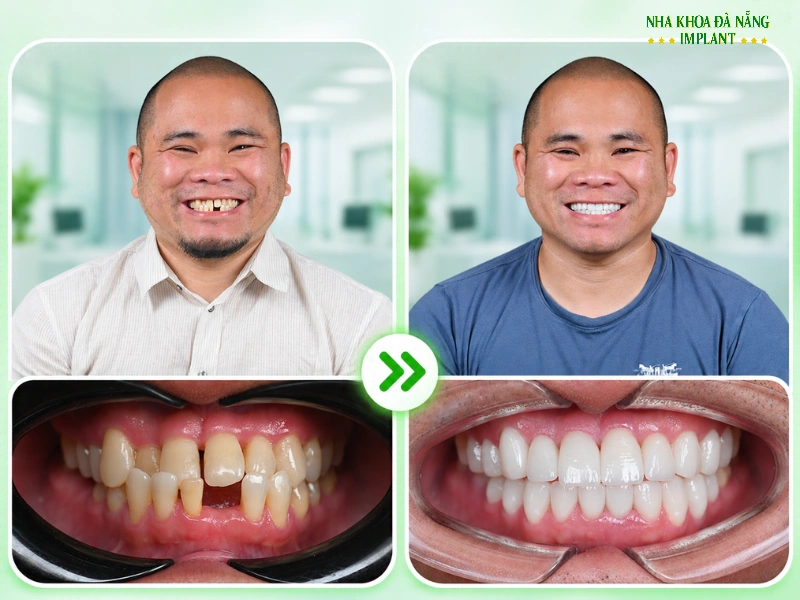
Ceramic Dental Restorations at Da Nang Implant Dental Clinic
To achieve natural-looking ceramic restorations, use the teeth visible when you smile as a reference for shade matching. Then, work with your dentist to evaluate the tooth shape when your lips are relaxed, when you speak, and when you smile.
If you are restoring a single central incisor, the other central incisor serves as an important reference for shade matching. The area near the gumline is typically darker, while the incisal edge may be slightly translucent. Your dentist can record these individual shade variations, allowing the dental technician to reproduce natural color transitions in the new restoration.
Learn more about single-tooth ceramic restorations.
If you are restoring several front teeth, you may consider a brighter shade based on your personal preferences. For example, if you are restoring four upper incisors, the adjacent canines and lower teeth may still be clearly visible when you smile.
Ask your dentist to compare your two preferred shades and observe your entire face in the mirror. This will help you assess the color difference between the restorations and your remaining natural teeth, as well as how each shade complements your lips and skin tone.
Both shades can look natural. On the VITA classical shade guide, A1 and B1 are two light shades with different underlying hues. A1 belongs to the reddish-brown group, while B1 belongs to the reddish-yellow group.
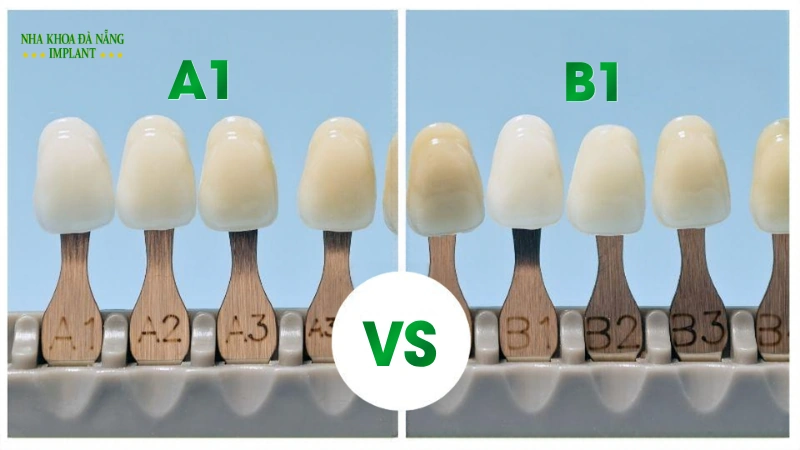
A1 or B1: Which Ceramic Tooth Shade Looks More Natural?
The difference is quite subtle, so it is best to compare each shade directly with your natural teeth under neutral lighting.
Dentists typically record tooth shades at the beginning of an appointment, while the teeth are still hydrated, because dehydration can temporarily make teeth appear whiter.
If you admire a particular smile in a photograph, identify the specific features that appeal to you. Perhaps the two central incisors are slightly longer than the lateral incisors, or the tooth corners are gently rounded.
When evaluating tooth shapes, consider whether these features complement the neighboring teeth and the natural contours of your lips.
| Features | What to Look For |
|---|---|
| Tooth Length and Width | The upper central incisors are generally wider than the lateral incisors. If you prefer a more slender appearance, consider both the length and width in relation to the adjacent teeth. |
| Tooth Contours and Corners | Relatively straight sides and defined corners create a slightly square shape. Curved contours and rounded corners create an oval shape with a softer appearance. |
| Incisal Edges and Lip Line | When your lips are relaxed, observe how much of the upper incisors is visible. When smiling, consider how the curve of the incisal edges follows the contour of your lower lip. |
If your front teeth have become worn or chipped, bring along an older photograph that clearly shows your smile. This can help your dentist understand the original tooth length and contours you would like to restore.
When significant changes to the shape of several teeth are planned, your dentist may recommend an intraoral mock-up.
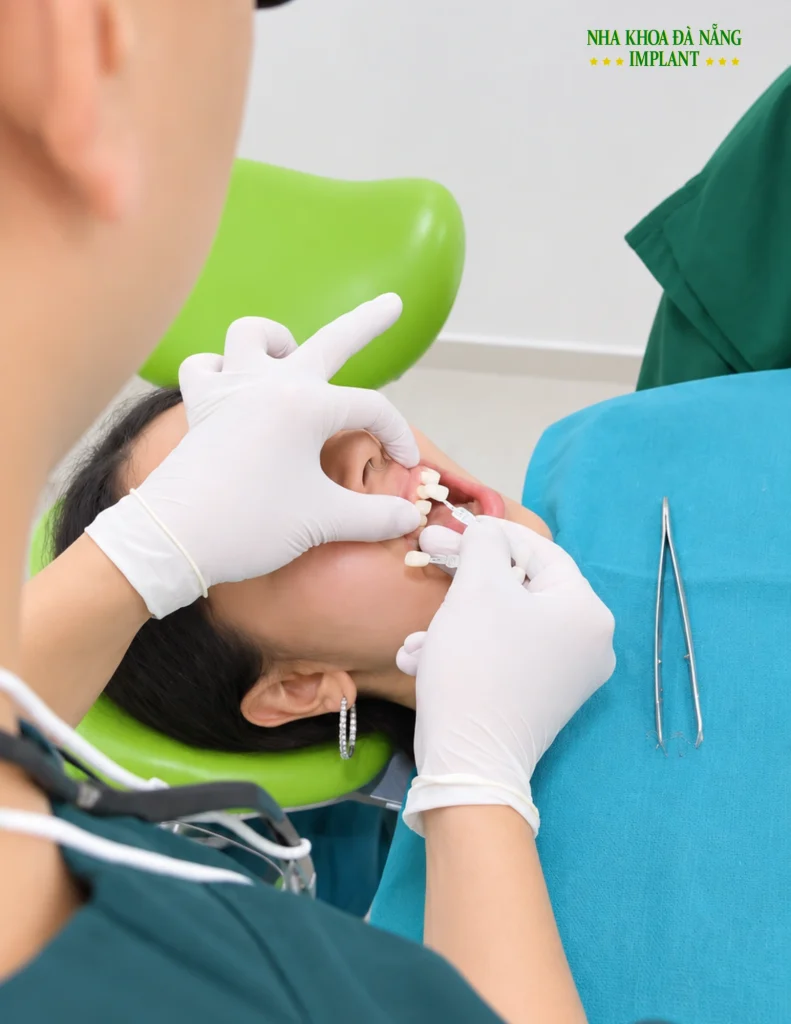
What Should You Check During a Ceramic Restoration Try-In?
This allows you to experience the proposed tooth length and projection before the final restorations are completed.
Smile naturally and try saying a sentence containing an “f” sound, such as the word “coffee.” When you pronounce this sound, your dentist can assess the position of the upper incisal edges in relation to your lower lip.
If your lips feel uncomfortable when speaking or you would prefer more rounded tooth corners, point out the specific areas so your dentist can evaluate them. Your dentist will also check how your upper and lower teeth come together when you bite.
When trying in ceramic crowns or veneers before permanent bonding, compare their shade with the neighboring teeth and observe your entire smile in the mirror.
As part of the porcelain veneer procedure at Da Nang Implant Dental Clinic, you can try the veneers on your teeth and discuss their shade and shape with your dentist before they are permanently bonded.
Learn more about our porcelain veneer procedure.
With thin porcelain veneers, the underlying tooth color can influence the final appearance. The ability to mask discoloration also depends on the thickness and translucency of the ceramic material.
If one tooth is significantly darker than the surrounding teeth, your dentist should evaluate it individually before recommending a suitable ceramic material and shade.
Teeth whitening agents only lighten natural teeth. If you whiten your teeth after receiving ceramic restorations, the neighboring natural teeth may become lighter than the restorations.
If you plan to combine both treatments, discuss this with your dentist in advance so that shade matching can be scheduled after your natural tooth color has stabilized.
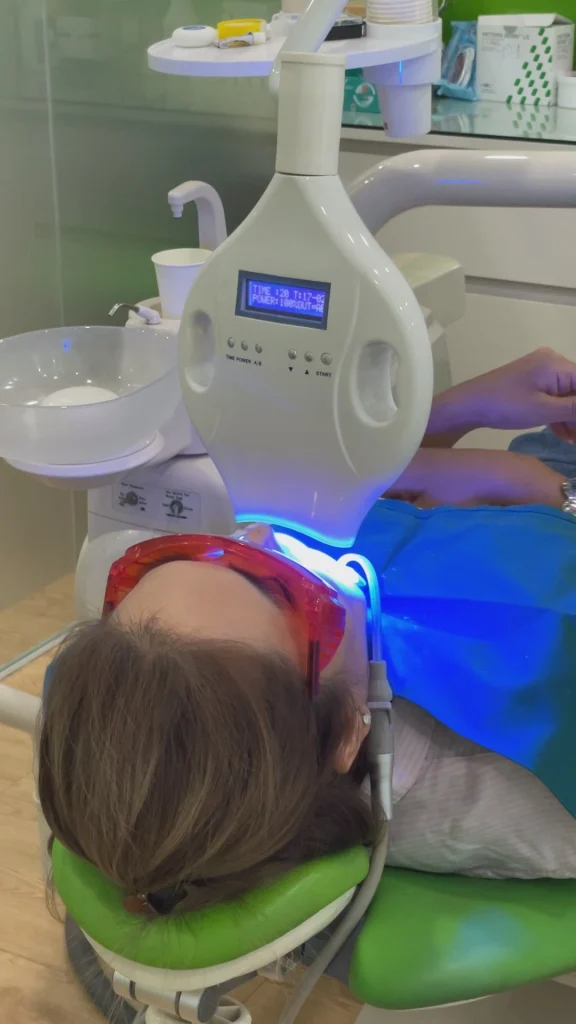
If you plan to combine both treatments, discuss this with your dentist in advance so that shade matching can be scheduled after your natural tooth color has stabilized.
To compare tooth shades in person and discuss the most suitable tooth shape for your smile, visit Da Nang Implant Dental Clinic.
Address: 420 2 Thang 9 Street, Hoa Cuong Ward, Da Nang, Vietnam.
Hotline: 0899 412 412
Contact us or schedule a ceramic restoration consultation at our clinic.

Ngày: 06/12/2023

Ngày: 07/12/2023

Ngày: 15/12/2023

Ngày: 15/12/2023