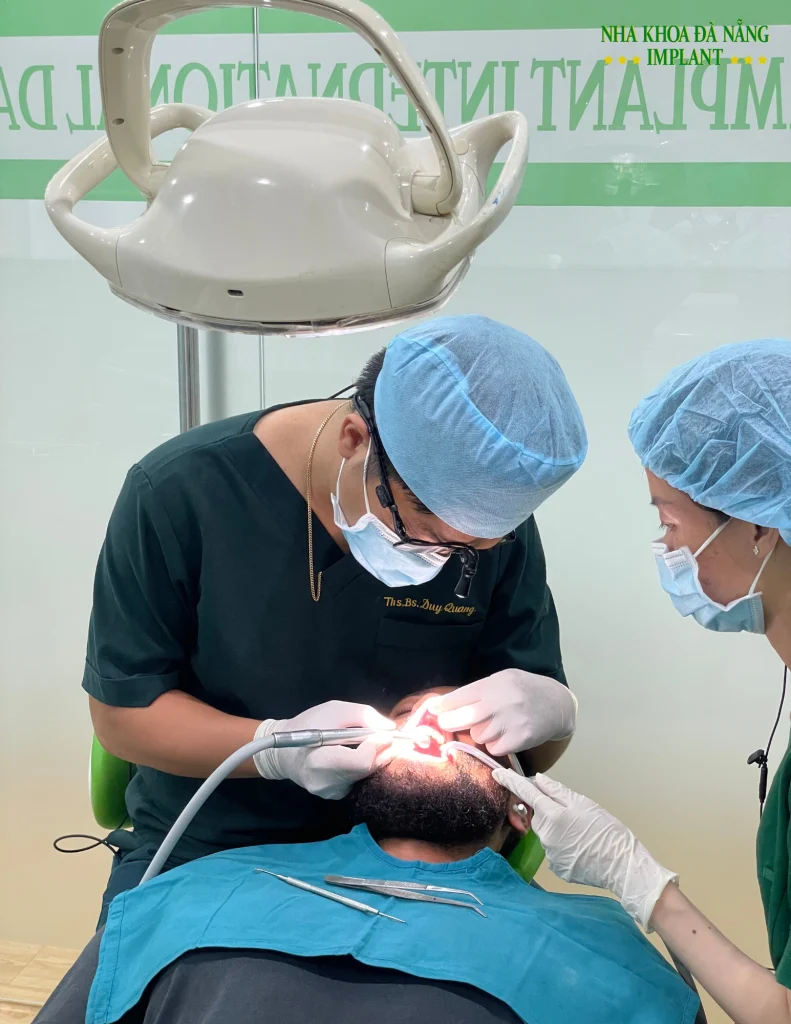
A little blood when brushing, tooth sensitivity when drinking cold water, or bad breath even after thorough cleaning… These changes are often overlooked because “it doesn’t hurt much yet” or “I can still eat normally.”
However, not every oral health problem begins with obvious pain. Waiting until toothache starts affecting your sleep or meals may mean missing the opportunity for earlier treatment.
Join Da Nang Implant Dental Clinic in recognizing common signs of oral disease that are often ignored and learning the appropriate steps to protect your smile.
“It’s probably because my toothbrush is too hard” is what many people think when they notice blood in the toothpaste foam. Although brushing too aggressively can cause irritation, repeated bleeding may also be associated with gingivitis.

Signs Your Oral Health May Be Calling for Attention
You should pay attention if your gums also show signs such as:
Gum disease can progress and affect the tissues and bone supporting the teeth if it is not properly controlled. Therefore, frequent bleeding is a sign that should be checked.
What should you do? Continue brushing gently with a soft-bristled toothbrush, clean between your teeth properly, and schedule a dental examination if the bleeding keeps recurring. Avoiding the bleeding area completely may allow plaque to continue building up.
A sip of cold water makes you wince, or a bite of something sweet causes a sudden sharp sensation — these reactions should not be ignored if they happen frequently.
Tooth sensitivity may be associated with:
According to the American Dental Association, sensitive teeth can have several different causes and should be managed according to the specific condition.
What you should know: Toothpaste for sensitive teeth may help in some cases, but it cannot repair a cavity or a crack. If sensitivity is limited to one tooth, continues after you stop eating or drinking, or becomes more intense over time, you should have it checked early.
Bad breath after eating onions or garlic is usually temporary. However, if bad breath persists despite regular oral hygiene, it may be related to gum disease, tooth decay, infection, or dry mouth.
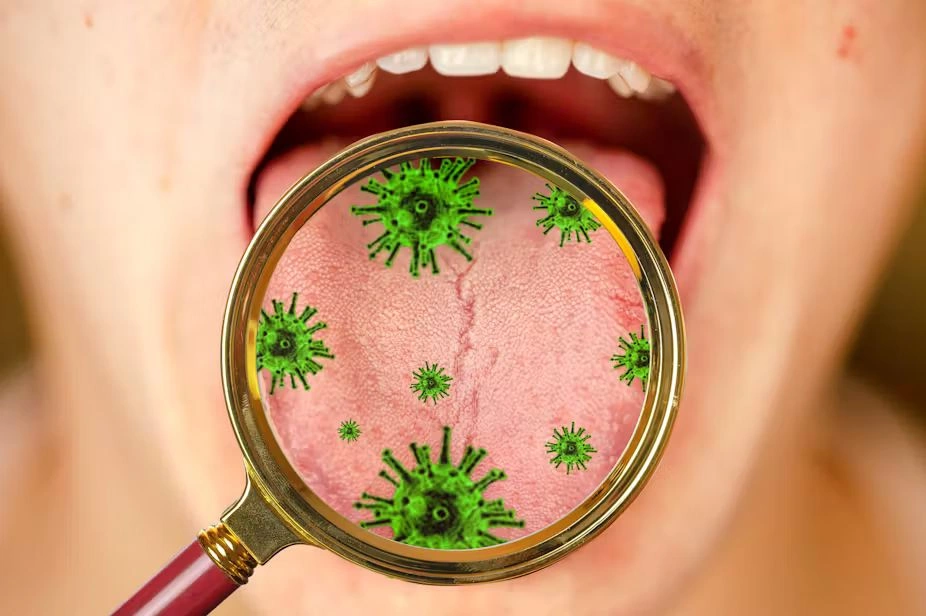
Persistent bad breath
Mouthwash and breath fresheners may help you feel more comfortable for a short time, but they do not necessarily address the underlying cause.
What should you do? Clean your teeth, interdental spaces, and tongue gently. If bad breath continues for several weeks despite proper care, or is accompanied by toothache, swollen gums, or bleeding gums, visit a dental clinic for evaluation.
Do your teeth seem “longer” than before, are the spaces between them becoming more noticeable, or does a permanent tooth feel slightly loose? These changes should be evaluated by a dentist.
Gum recession can expose the tooth roots. Meanwhile, loose teeth may indicate problems with the supporting tissues, especially when accompanied by bleeding gums or discomfort while chewing.
What should you do? Schedule an examination early, avoid repeatedly wiggling the tooth yourself, and avoid chewing hard foods on the affected side. Do not assume that loose teeth in adults are a normal part of aging.
Tooth decay does not always cause pain immediately. Sometimes, the only signs you notice are chalky white, brown, or black spots, or a small hole on the tooth surface.
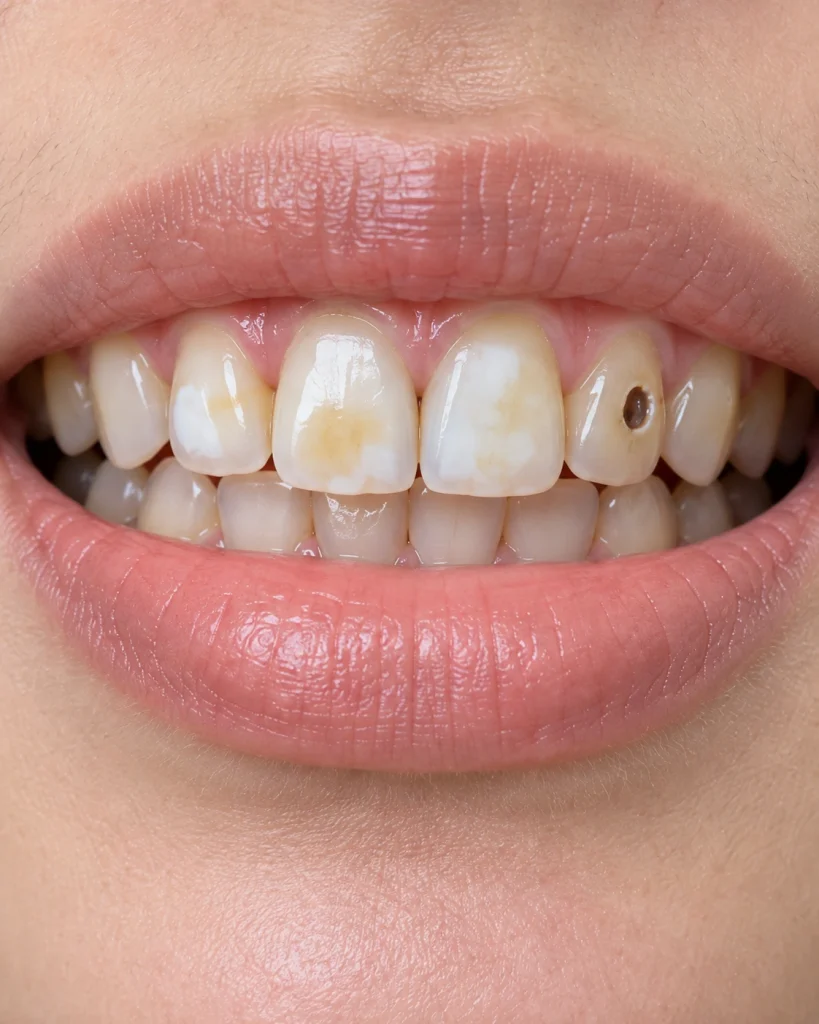
Unusual Tooth Spots or Small Cavities
However, not every dark spot means tooth decay. Some may simply be staining and need to be distinguished through a dental examination.
If the discolored area is associated with food getting stuck, sensitivity, or pain, you should have it checked sooner. The absence of pain does not necessarily mean that the tooth is healthy.
What should you do? Do not use sharp objects to pick at the suspicious area. Let your dentist determine whether it is staining, tooth decay, or another condition before deciding on the appropriate treatment.
Tooth pain accompanied by swollen gums, an unpleasant taste in the mouth, or pus may be a sign of infection. If a dental abscess is present, professional dental treatment is required, and the condition will not resolve simply by rinsing your mouth.
In particular, facial or jaw swelling, fever, worsening pain, or difficulty opening the mouth are signs that require urgent evaluation. If you experience difficulty breathing, swallowing, or speaking, significant swelling inside the mouth, or swelling and pain around the eye, seek emergency medical care immediately.
What should you do? Contact a dental clinic for an early examination. Do not attempt to puncture the swollen area or take antibiotics without medical advice. Painkillers also do not replace treatment of the underlying cause.
Persistent signs of dry mouth can do more than make communication uncomfortable; they may also affect your oral health. Common signs include a sticky feeling in the mouth, dry tongue, cracked lips, frequent thirst, or difficulty chewing and swallowing dry foods.
Saliva helps cleanse the mouth and protect the teeth. When saliva production decreases, the risk of tooth decay, bad breath, and certain oral infections may increase.
If signs of dry mouth occur frequently or persist over time, the cause may not simply be inadequate water intake. Dry mouth can be associated with medications you are taking or certain health conditions.
What should you do? Drink water regularly, avoid tobacco, and monitor your signs of dry mouth. If the condition persists, speak with your doctor or dentist to identify the possible cause. Do not stop any prescribed medication on your own, and bring a list of your current medications when you attend an appointment.
A sore caused by accidentally biting your cheek may be minor. However, if an ulcer, red or white patch, or unusual lump in the mouth lasts longer than two weeks, you should see a doctor or dentist for evaluation.
Other signs to watch for include unusual numbness, difficulty moving the tongue, difficulty chewing or swallowing, or a lump in the neck.
These symptoms do not necessarily mean cancer, but they should be evaluated to determine the cause and rule out more serious conditions.
What should you do? Note when the lesion first appeared, monitor any changes, and avoid repeatedly treating it as a simple “mouth ulcer” if it does not heal.
You can use the guide below to help determine the appropriate next step:
| Level | Signs to Watch For | Recommended Action |
|---|---|---|
| Schedule a dental visit soon | Recurrent gum bleeding, frequent sensitivity, persistent bad breath, gum recession, loose teeth | Visit a dentist to identify the cause |
| Have the lesion evaluated | Mouth ulcers, red or white patches, or unusual lumps lasting more than two weeks | See a doctor or dentist even if there is no pain |
| Urgent evaluation needed | Severe pain, pus, facial or jaw swelling, fever, difficulty opening the mouth | Contact a dental clinic or healthcare provider promptly |
| Seek emergency care immediately | Difficulty breathing, swallowing, or speaking; significant swelling inside the mouth; swelling and pain around the eye | Go to the nearest emergency medical facility |
You do not need to wait until several symptoms appear at the same time before seeking care. A single sign that persists or becomes worse is already a reason to have it checked.
Small habits, practiced consistently, can help improve your oral hygiene:
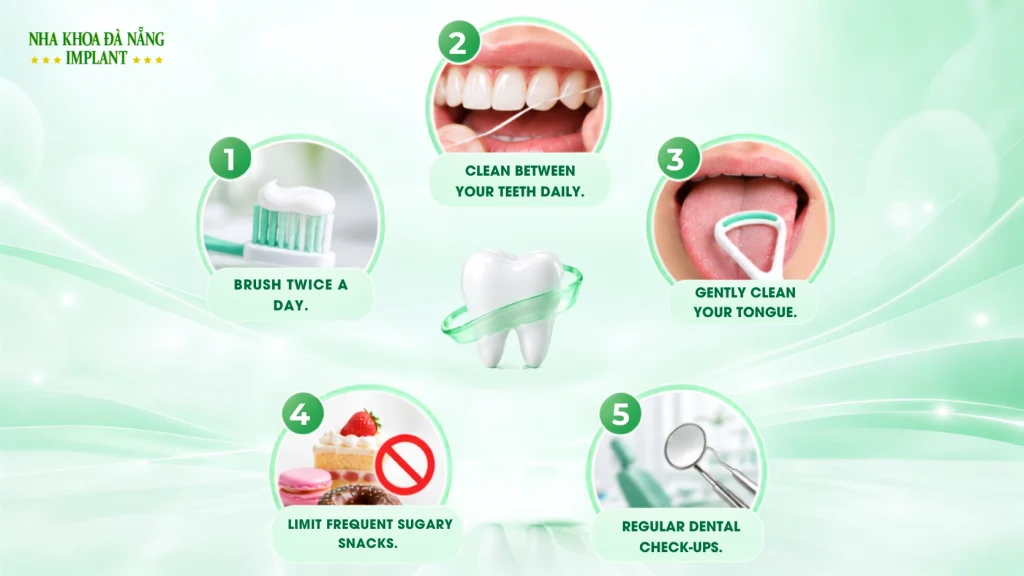
Steps for Proper Oral Care
Home care is the foundation of good oral health. However, when symptoms persist, a dental examination is necessary to identify the cause and determine the most appropriate treatment.

Ngày: 19/04/2025

Ngày: 26/10/2023

Ngày: 14/10/2026
Ngày: 13/10/2026

Ngày: 08/10/2026
Ngày: 05/10/2026