
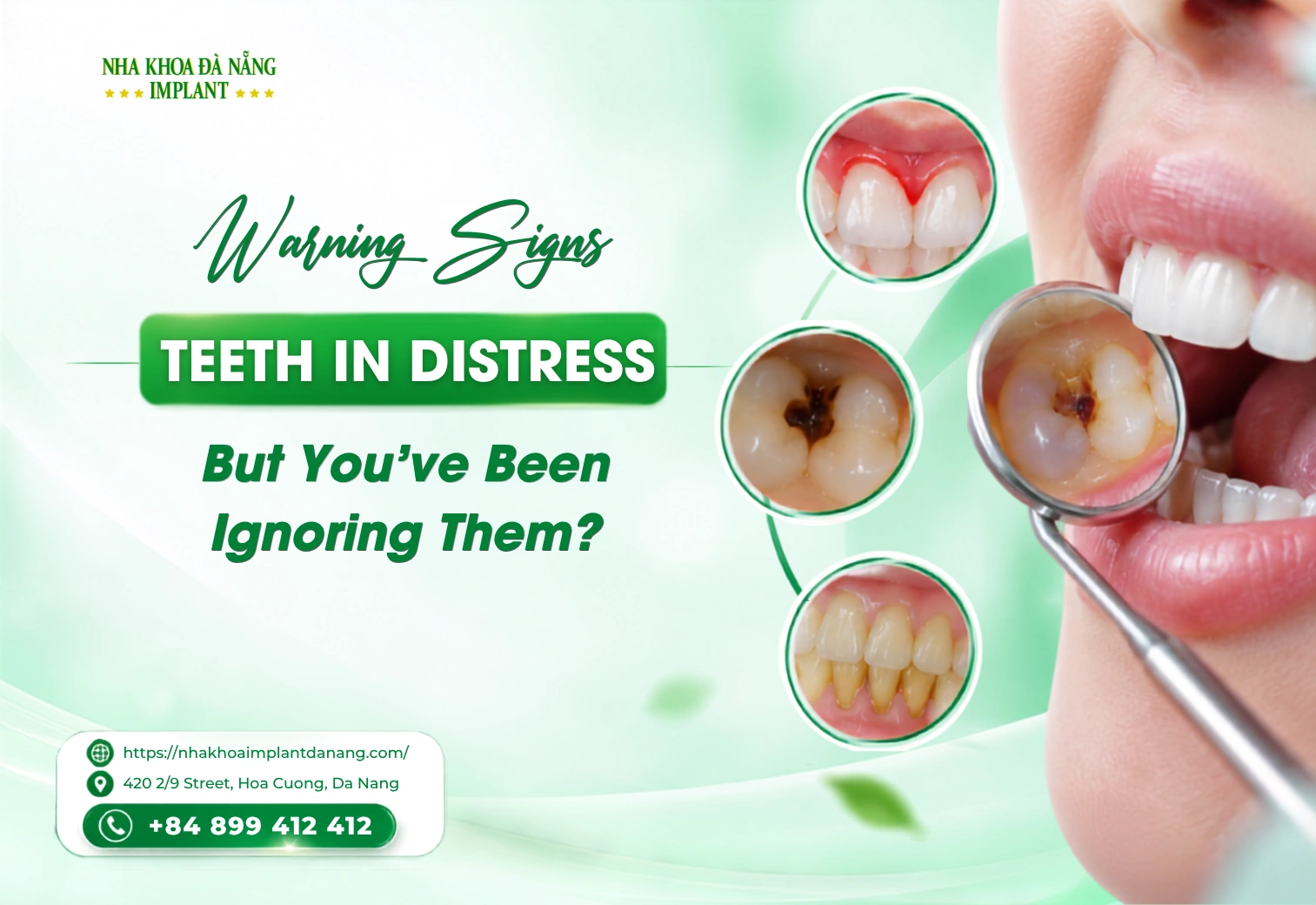
Red, swollen gums, bleeding when brushing, or persistent bad breath are often considered minor concerns. However, these may be early signs of gingivitis – the earliest stage of periodontal disease. When detected and treated properly, gingivitis can usually be controlled and reversed. If left untreated, however, it may progress to periodontitis and damage the tissues and bone that support the teeth.
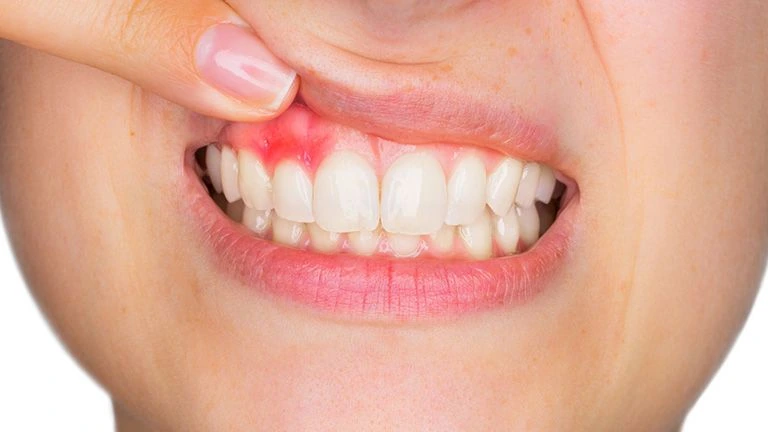
What is gingivitis?
So, what complications can early gingivitis treatment help prevent, and when should you see a dentist? The article below will help you understand the warning signs so you do not overlook important signals from your gums.
Gingivitis is inflammation of the gum tissue surrounding the teeth. The most common cause is bacterial plaque accumulating along the gumline because the teeth and interdental spaces are not cleaned effectively.
Plaque is initially soft and can be removed with proper toothbrushing and interdental cleaning. If it remains for too long, plaque may mineralize into tartar (calculus). Tartar cannot be completely removed with a toothbrush alone and must be professionally removed at a dental clinic.
Common signs of gingivitis include:
Gingivitis can progress quietly and may not cause noticeable pain. Therefore, the absence of pain does not necessarily mean your gums are healthy.
Gingivitis is an early stage of gum disease and is usually reversible when its causes are brought under control. Removing plaque and tartar, combined with proper oral hygiene, can help reduce inflammation and bleeding and allow the gums to return to a healthier condition.
It is important to understand that gingivitis and periodontitis are not the same:
Once the condition progresses to periodontitis, treatment is usually more complex, and lost supporting tissues cannot fully regenerate on their own. Treating the condition at the gingivitis stage therefore helps preserve the teeth and reduces the risk of needing more advanced treatment later.
This is the most important complication to prevent. When plaque and tartar continue to remain around the gums, inflammation can spread deeper around the tooth roots. The gums may gradually separate from the teeth and form periodontal pockets – spaces where bacteria and plaque can accumulate more easily.
Periodontitis does not only cause swollen and bleeding gums; it can also damage the periodontal ligament and alveolar bone. Early treatment of gingivitis helps remove the causes of inflammation before the damage spreads to the tissues that support the teeth.
The alveolar bone supports the teeth and keeps them stable within the dental arch. When periodontitis persists, the bone around the tooth roots may gradually be lost. This process is often difficult to detect visually and may require a dental examination, periodontal pocket measurements, or X-rays when indicated.
Bone loss caused by periodontal disease cannot be corrected simply by brushing or using mouthwash. Some severe cases require advanced periodontal treatment or even surgery. Controlling gingivitis from the beginning helps reduce the risk of the disease progressing to a stage where bone destruction occurs.
Prolonged inflammation and damage to the tissues around the teeth can alter the gumline and expose more of the tooth roots. The teeth may then appear longer, new gaps may become visible, and the appearance of the smile may be affected.
Unlike the crown of the tooth, the root surface is not protected by enamel, making it more sensitive to hot, cold, sour, or sweet foods and drinks. Exposed roots are also more prone to abrasion and root caries if oral hygiene is inadequate. Early gingivitis treatment helps maintain healthy gum tissue and limit these unfavorable changes.
When inflammation spreads deeper, periodontal pockets can develop and trap bacteria and food debris. In some cases, a localized infection may form an abscess around the tooth, causing swelling, pain, pus discharge, bad breath, or discomfort when biting and chewing.
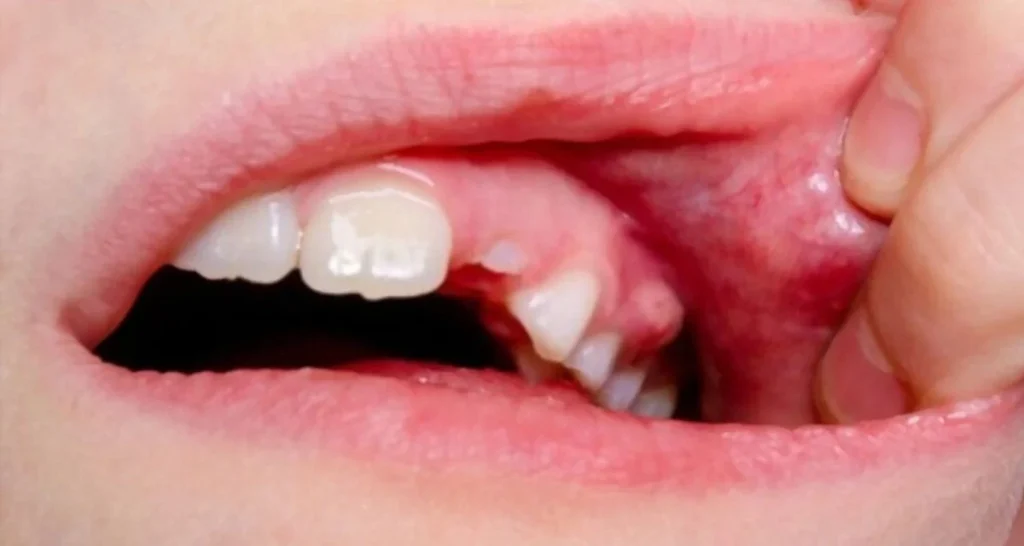
Preventing periodontal pockets and gum abscesses
Dental or gum abscesses should be evaluated and treated promptly by a dentist rather than being left to resolve on their own. Controlling plaque and gingival inflammation early helps reduce the conditions that allow infections around the teeth to develop.
Mild gingivitis may only cause bleeding, but advanced periodontal disease can cause pain, discomfort while chewing, and persistent bad breath. The odor may be associated with plaque, tartar, bacteria around the gums, and inflammatory fluid within periodontal pockets.
These problems can affect not only eating but also confidence in social situations. Early treatment helps remove the causes of inflammation, improve gum health, and support more effective control of bad breath.
Teeth are held firmly in place by the alveolar bone, periodontal ligament, and surrounding gum tissue. When these structures are destroyed by periodontitis, teeth may shift, develop spaces, become loose, and lose chewing efficiency.
In advanced stages, there may no longer be enough supporting tissue to save a tooth, making extraction necessary. Periodontal disease with bone loss is an important cause of tooth loss in adults. Treating gingivitis early is therefore a practical step toward preserving natural teeth for the long term.
Early-stage gingivitis can often be managed with professional cleaning, oral hygiene instruction, and modification of risk factors. Periodontitis, on the other hand, may require subgingival scaling, root surface debridement, repeated maintenance treatment, or periodontal surgery depending on severity.
The later treatment begins, the more time and cost may be required, while the prognosis for preserving the teeth may also decrease. Early examination allows the dentist to intervene at an appropriate and usually less complex stage.
Oral health is linked to overall health, but this relationship should be understood correctly to avoid unnecessary concern. Many studies have reported associations between periodontal disease and certain chronic conditions. In particular, people with diabetes may have a higher risk of severe gum disease and slower healing; conversely, periodontitis may make blood glucose control more difficult.
However, gingivitis should not be interpreted as directly causing every cardiovascular or systemic disease. These associations are influenced by many shared factors, including smoking, age, lifestyle, and underlying health conditions.
People with diabetes, people who smoke, pregnant patients, those with reduced immunity, or anyone with a history of periodontal disease should provide their dentist with a complete medical history so an appropriate follow-up schedule can be planned.
You should schedule a dental examination if you have one or more of the following signs:
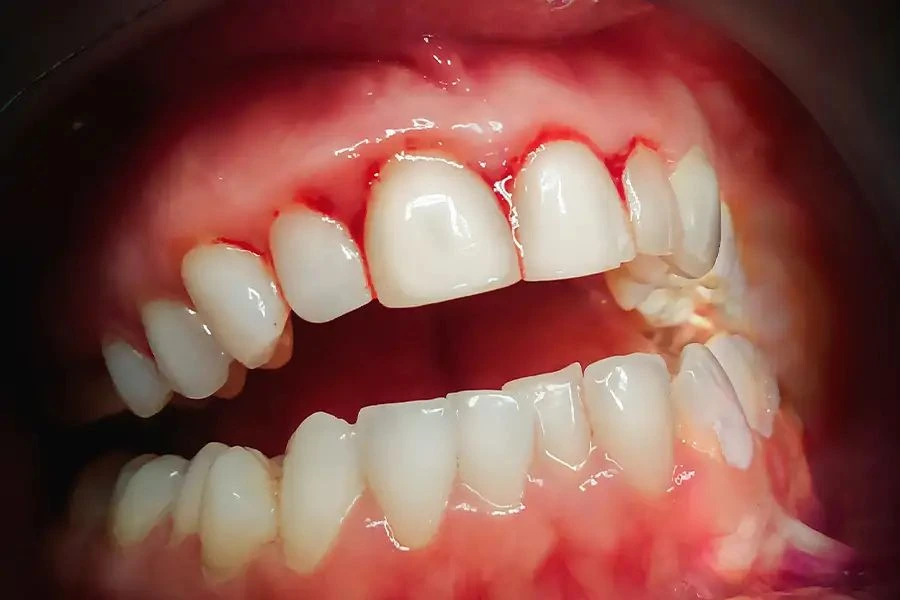
Swollen, red gums
If you develop rapidly increasing swelling, severe pain, pus discharge, fever, difficulty opening your mouth, or difficulty swallowing, contact a dental clinic promptly so the infection can be evaluated.
Treatment depends on the cause and severity of the inflammation. The dentist will usually examine the teeth and gums, assess the amount of plaque and tartar, and evaluate relevant risk factors. In some cases, periodontal pocket measurements or X-rays may be recommended to determine whether the supporting tissues have been affected.
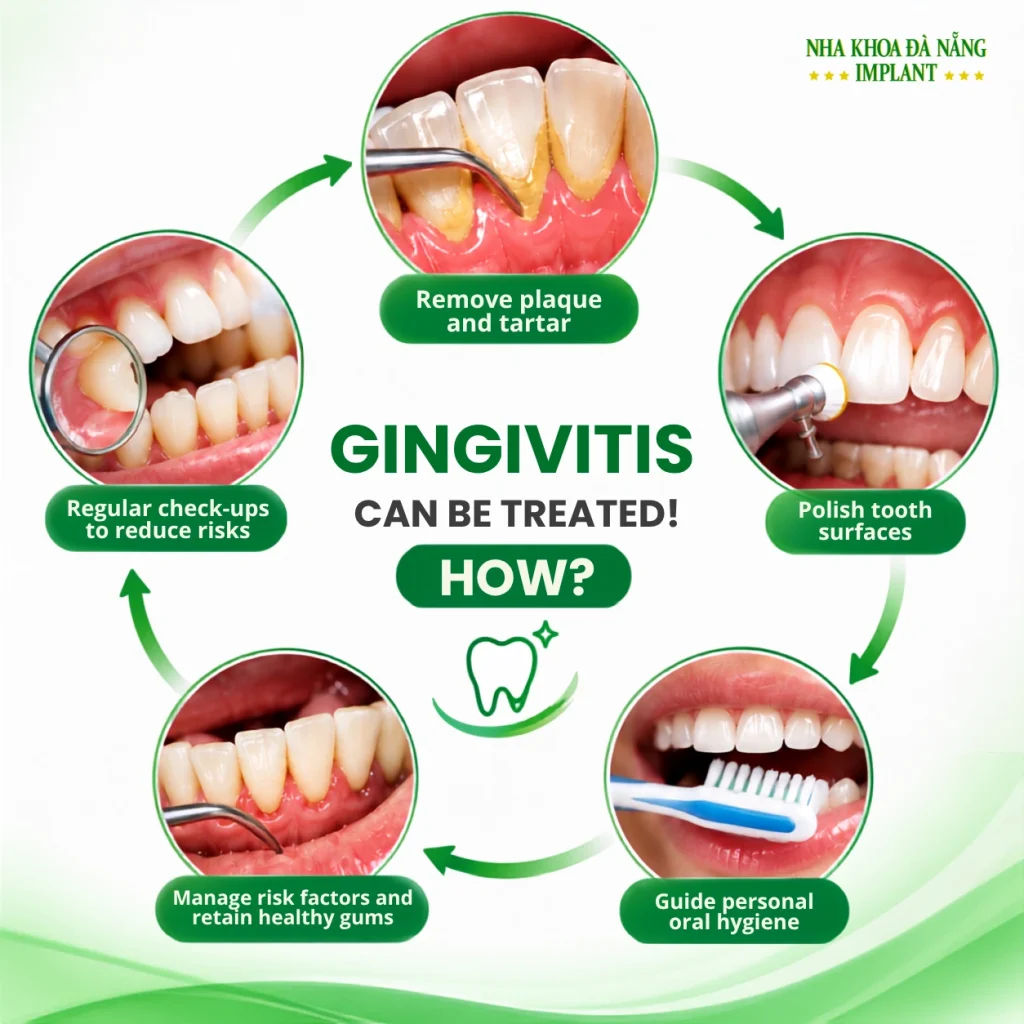
How is gingivitis treated?
Early gingivitis treatment usually includes:
Medications or antibacterial mouthwashes do not replace the mechanical removal of plaque and tartar. You should not use antibiotics on your own or use therapeutic mouthwashes for prolonged periods without professional guidance.
After treatment, maintaining good daily oral care habits plays a major role in keeping the condition under control:
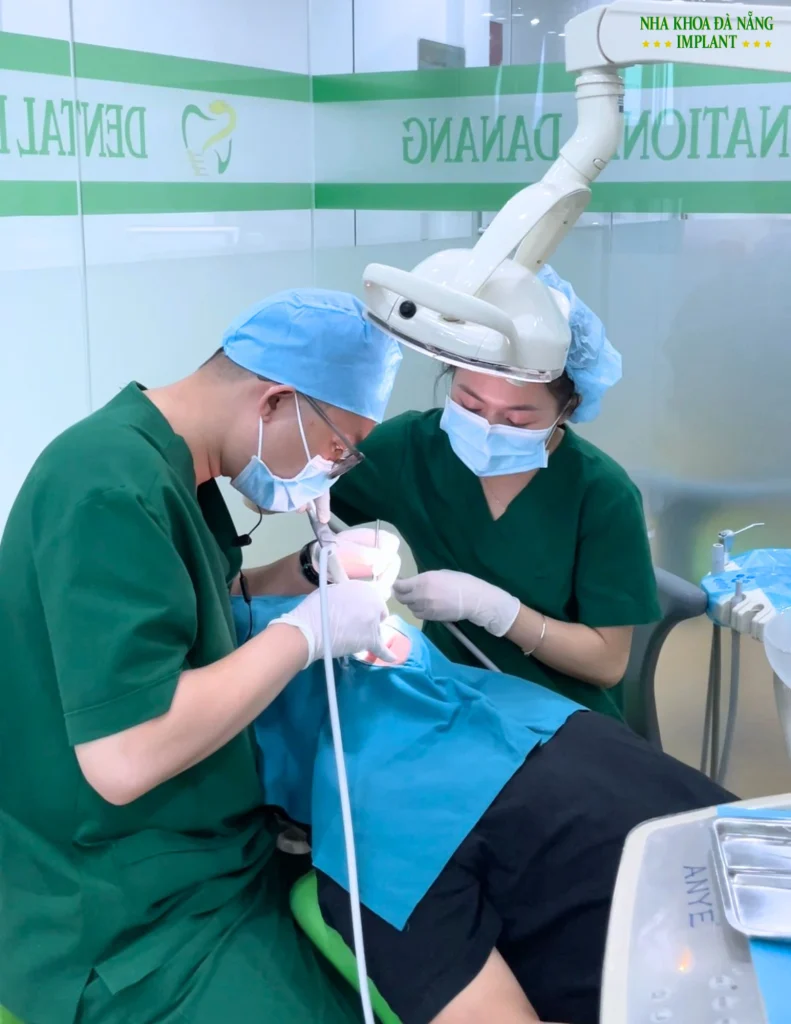
Treatment at Da Nang Implant Dental Clinic
There is no single fixed scaling schedule that is suitable for everyone. People who tend to accumulate tartar easily, smoke, have diabetes, are undergoing orthodontic treatment, or have a history of periodontal disease may require more frequent monitoring.
Early treatment of gingivitis helps reduce the risk of progression to periodontitis and lowers the likelihood of periodontal pockets, gum recession, bone loss, abscesses, pain when chewing, loose teeth, and tooth loss. Intervention at an early stage is usually simpler and also helps preserve natural teeth and maintain long-term oral health.
If you have red or swollen gums, bleeding when brushing, persistent bad breath, or heavy tartar buildup, visit Da Nang Implant Dental Clinic for a professional examination and assessment of the severity of inflammation. Early detection provides the best opportunity for simpler treatment and for preventing damage to the tissues that support the teeth.
Book an appointment at Da Nang Implant Dental Clinic for a gum health check-up and a personalized treatment plan.

Ngày: 19/04/2025

Ngày: 26/10/2023
Ngày: 08/10/2026
Ngày: 05/10/2026
Ngày: 30/09/2026
Ngày: 22/09/2026